

Dangerous Minds
Into the classroom with Michelle Pfeiffer

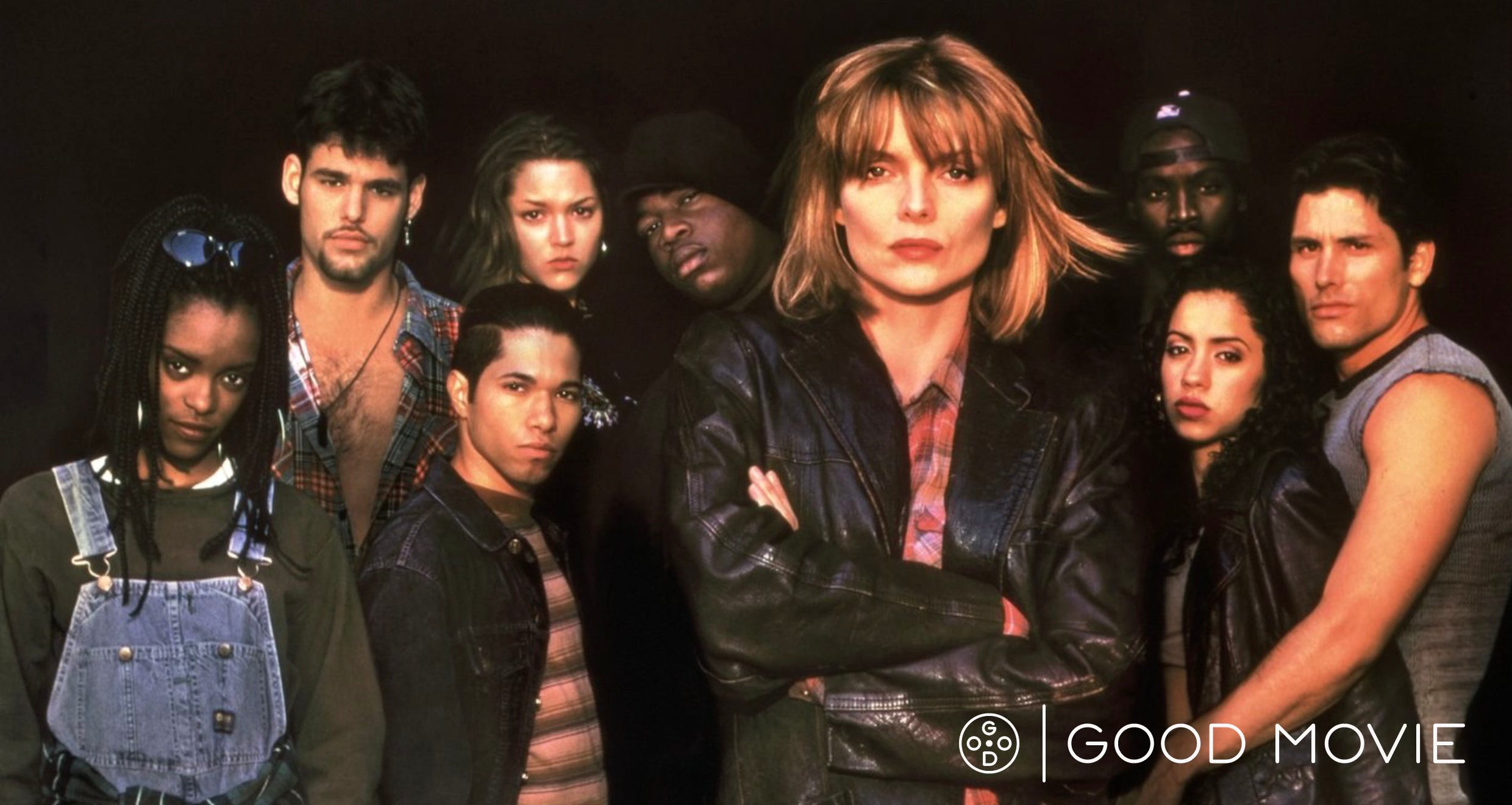
Directed By: John N. Smith
Other Notable Films From Smith: Just this one, really.
Starring: Michelle Pfeiffer, George Dzundza, Renoly Santiago, Wade Dominguez
Screenplay By: Ronald Bass
Movie Synopsis: A white teacher gives candy bars to some non-white students, who then become good at school.
Signature Line: “As I walk through the valley of the shadow of death, I take a look at my life and realize there’s nothing left.”1
THE INTRODUCTION
An accounting of time, and people, and context
All teacher movies run the same playbook.
It doesn’t matter if it’s a grounded and cogent film, like, say, Stand and Deliver, which tells the true-to-life story of Jaime Escalante, a brilliant instructor who taught high-level math to classes of underprivileged Latino kids in East Los Angeles. Or if it’s a film that stretches itself beyond the limits of credulity, like, say, The Substitute, which is about an ex-Marine who takes a job as a substitute teacher and ends up having to bring down a principal and a street gang who are running a drug distribution ring out of an inner city high school in Miami.
Dead Poets Society. School of Rock. The Ron Clark Story. Freedom Writers. To Sir, with Love. The Emperor’s Club. Mr. Holland’s Opus. Even One Eight Seven, which features a plot point in it where the teacher cuts a students finger off, tattoos a pithy comment on it, then mails it to him.
Every teacher movie, when you pull apart its pieces and strip it down to its fundamental essence, trades in the same thing: sentimentality.
But here’s the thing that makes Dangerous Minds unique—the thing that, despite the movie’s occasional race-related clunkiness, has allowed it to age into one of the genre’s most enduring films: It purports to be one type of movie (namely, a take-me-seriously biopic), but actually it’s a whole different kind. And what I mean is: it takes the primary idea behind the job of being a teacher and bends it into something fantastical. It’s a teacher movie, yes, but it’s a teacher movie the way The Rock is a military movie or Bad Boys II is a cop movie.
I greatly enjoy Dangerous Minds. It’s as meaningful to me now as it was when I was a teacher (I taught at a middle school in Houston from 2006 to 2015), and as it was when I was a kid (I was 14 the year it came out, and that’s a pivotal point in every person’s pop-culture life).
I suspect it’ll always be that way.
THE VIEWING
A timestamped rewatch of Dangerous Minds
1:10: Coolio’s “Gangsta’s Paradise” is playing. No movie has ever benefitted more from being associated with a song than Dangerous Minds did from “Gangsta’s Paradise.”
1:11: To the above point, here are five other songs that came out in 1995: “Waterfalls” by TLC; “Kiss from a Rose” by Seal; “On Bended Knee” by Boyz II Men; “Fantasy” by Mariah Carey; and “This Is How We Do It” by Montell Jordan.” Every single one of those was a gigantic hit that created its own zeitgeist-shifting moment.
And yet, when Billboard tallied everything up at the end of the year, none of them were as big as Coolio’s “Gangsta’s Paradise,” which debuted in August of that year as part of the Dangerous Minds rollout and immediately became a global pop culture phenomenon. It went on to become the best-selling song of the year (over 3.5 million copies!!!), topped the charts in 18(!!!) different countries, and earned significant praise from the New York Times, Rolling Spin, XXL, The Source, SPIN, and basically every other place that covered music. “Gangsta’s Paradise” had so much gravity and momentum that it didn’t matter one single percent that Dangerous Minds was critically panned upon its release (it has a score of 36% on Rotten Tomatoes). “Gangsta’s Paradise” was so undeniably cool that Dangerous Minds, by extension, became undeniably cool, too.2
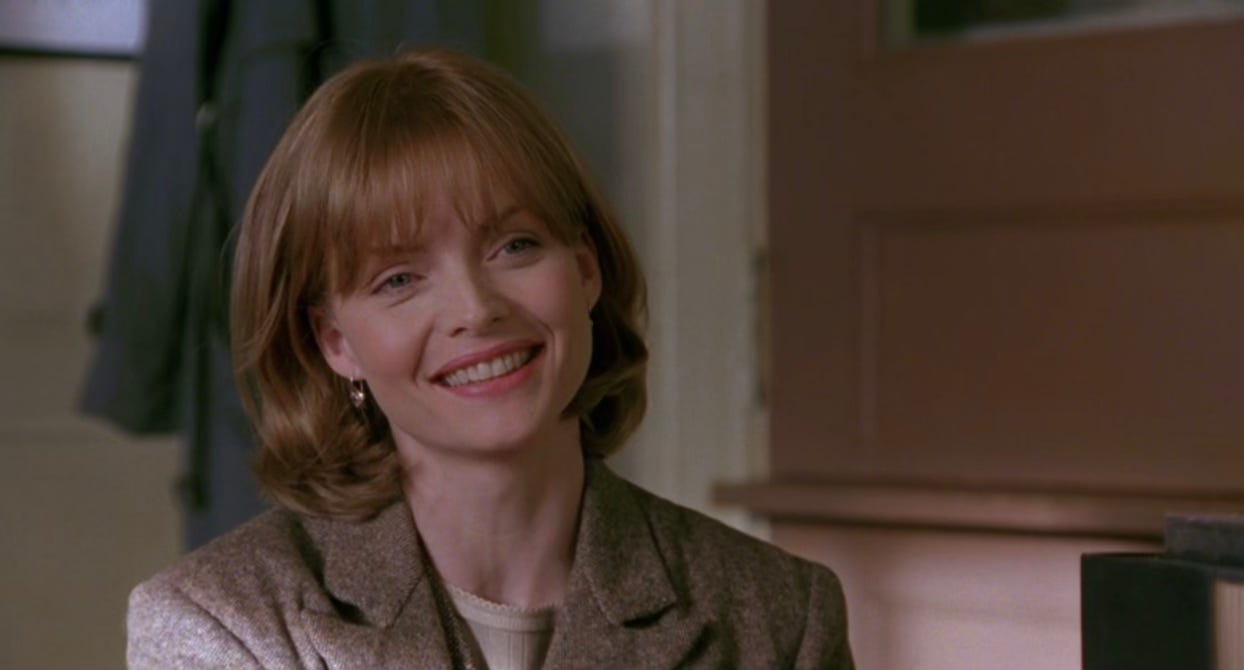
4:04: Michelle Pfeiffer is here. She plays LouAnne Johnson, a former Marine who is transitioning into her new life as a high school English teacher. I’m gonna make a whole bunch of jokes about this movie as we go through it, but it’s important to note: Michelle Pfeiffer, who had already been nominated for three(!!!) acting Oscars by the time she took this role, is legitimately great in it. She feels exactly the right amount of cool, and exactly the right amount of tough, and exactly the right amount of empathetic. She’s an all-time great movie teacher, mingling with Edward James Olmos’s Mr. Escalante from Stand and Deliver, Robin Williams’s Mr. Keating from Dead Poets Society, and Sidney Poitier’s Mr. Thackeray from To Sir, with Love in the top four ever.
4:58: When Miss Johnson interviews for the new role, her interviewer informs her that the position pays $24,700 per year. I remember rewatching this movie after I became a teacher in 2006 and being like, “They’re only paying her “$24,700!? That’s fucking crazy. I would have never taken that job.” But I just right now ran the numbers through one of those money inflation calculator things, and it turns out that what I was getting paid my first year as a teacher ($41,000) shakes out to about $300 less than what she was being paid, lol.
4:59: P.S. A $41,000 a year salary comes out to about $1,100 per paycheck after taxes and insurance and whatnot, if you’re curious.
5:00: P.P.S. $1,100 every two weeks is not nearly enough to pay all the bills when you have a family of four. That’s actually how I ended up becoming a writer. I needed a part-time job to supplement my full-time job. Fast forward 19 years and here we are. All things considered, I’m grateful—but we should really be paying teachers more.3
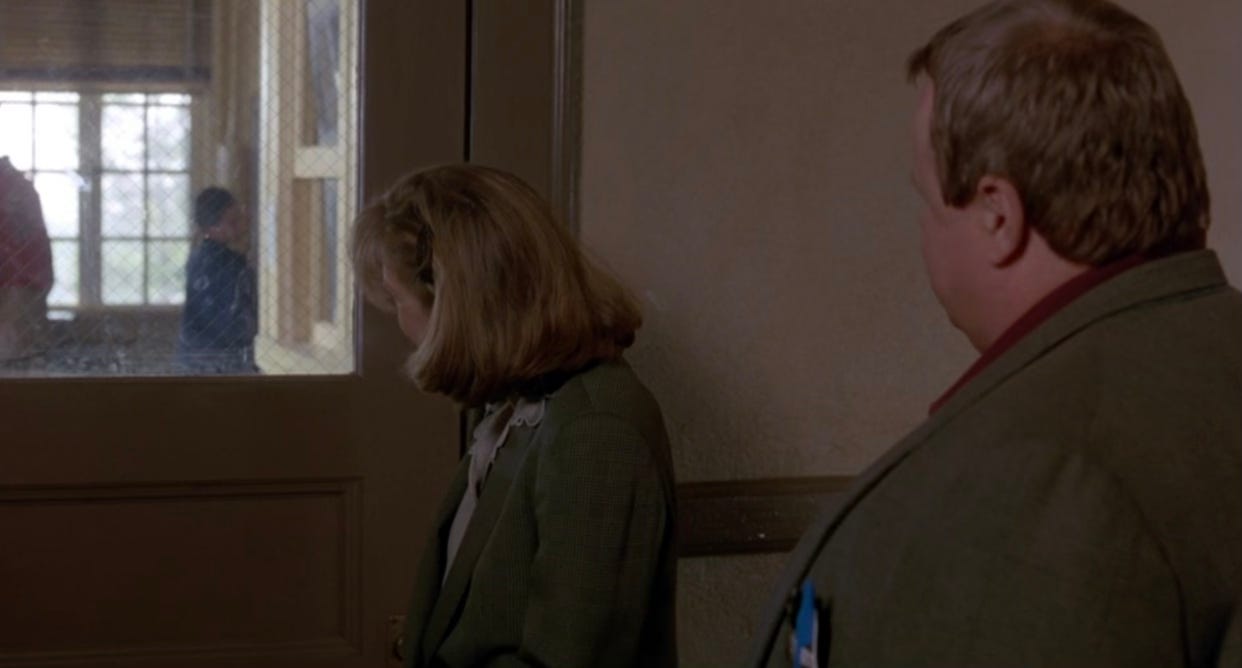
7:46: There’s stuff that happens for dramatic purposes in teacher movies that, after you’ve worked as a teacher, they become pet peeves of sorts. Right here’s one of my main ones: By the time Miss Johnson arrives to her classroom, the students are already inside. That’s strictly a movie-teacher thing. When you’re a real-life teacher, you treat the prospect of students arriving to your classroom with the same seriousness that Rambo treated the prospect of Mexican cartel members showing up to his farm in Rambo: Last Blood. You overprepare. You have escape tunnels and booby traps and shit.
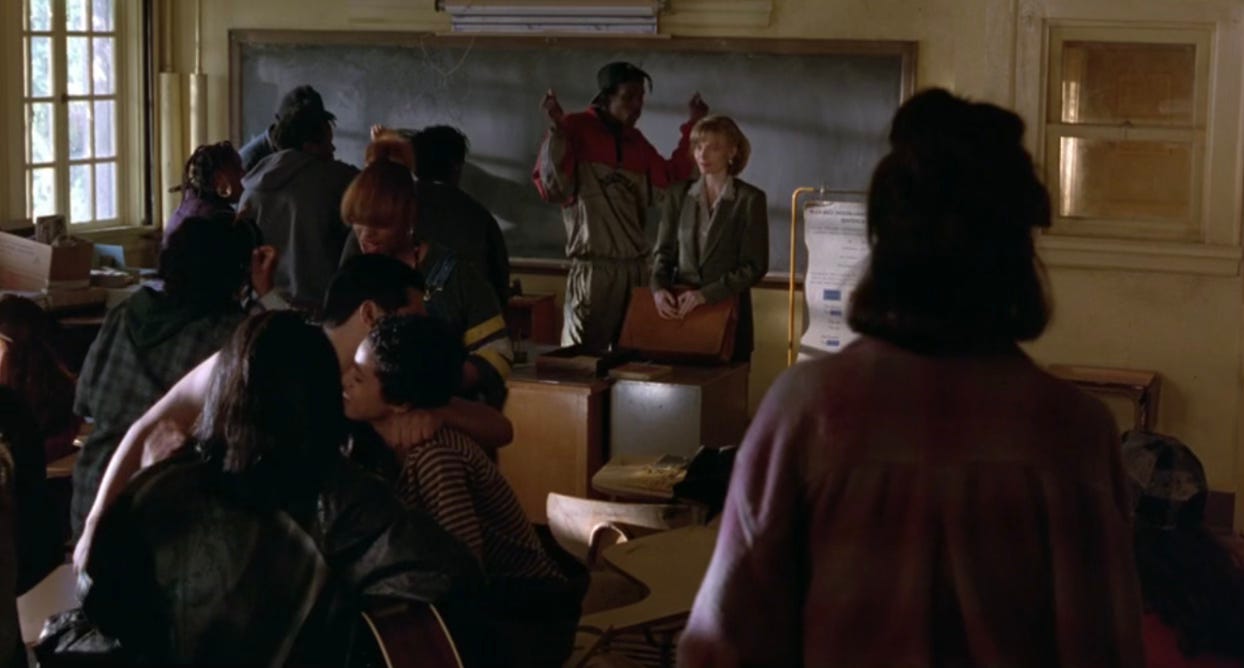
9:18: Dangerous Minds is a loose adaptation of the 1992 book My Posse Don’t Do Homework,4 which was written by the real-life LouAnne Johnson, who really was a former Marine who became a teacher.5 Among the many things that the producers and writers changed for the movie was the demographic of the class. In 2015, 20 years after Dangerous Minds came out, Johnson told The Guardian, “In my class, the kids were evenly mixed: Black, white, and Hispanic. In the movie, they made it all minority kids with a token white kid here and there. That perpetuates the myth that only minority kids are at risk, and that white kids don’t have problems.”
9:19: P.S. Here’s one of the token white kids the real Miss Johnson was talking about in the above quote:
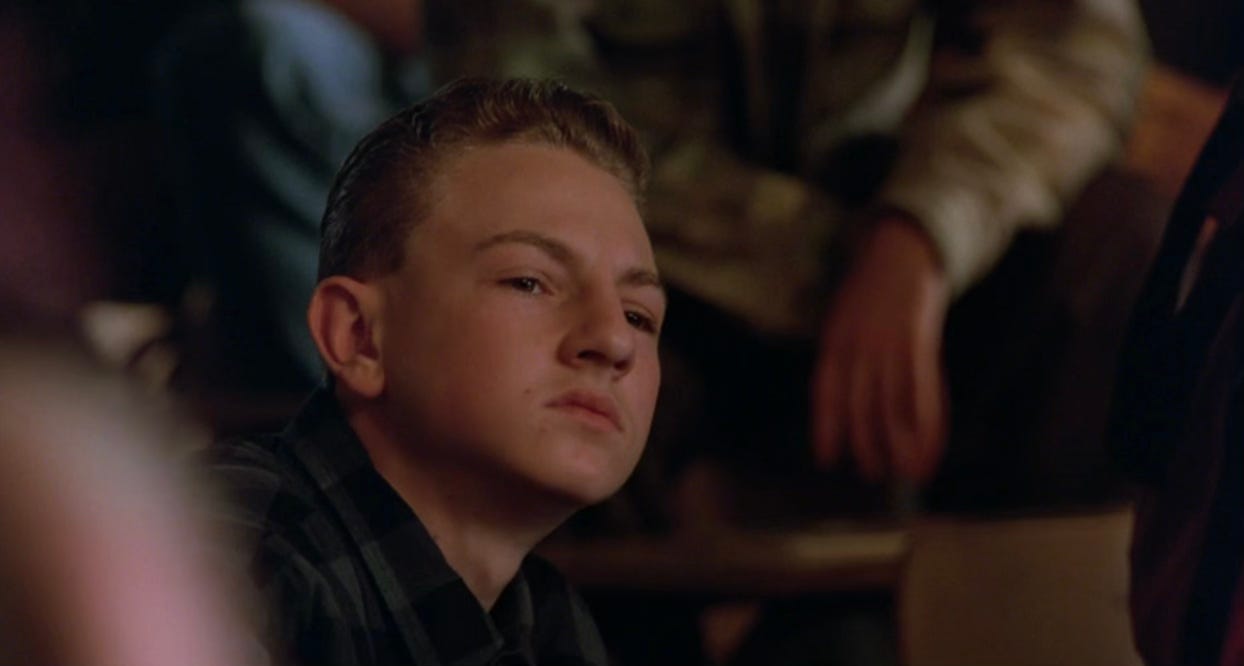
I don’t know a lot about a lot, but one thing I do know is that few things in this world are tougher than the one white kid who hangs out with (and dresses like) Mexicans.
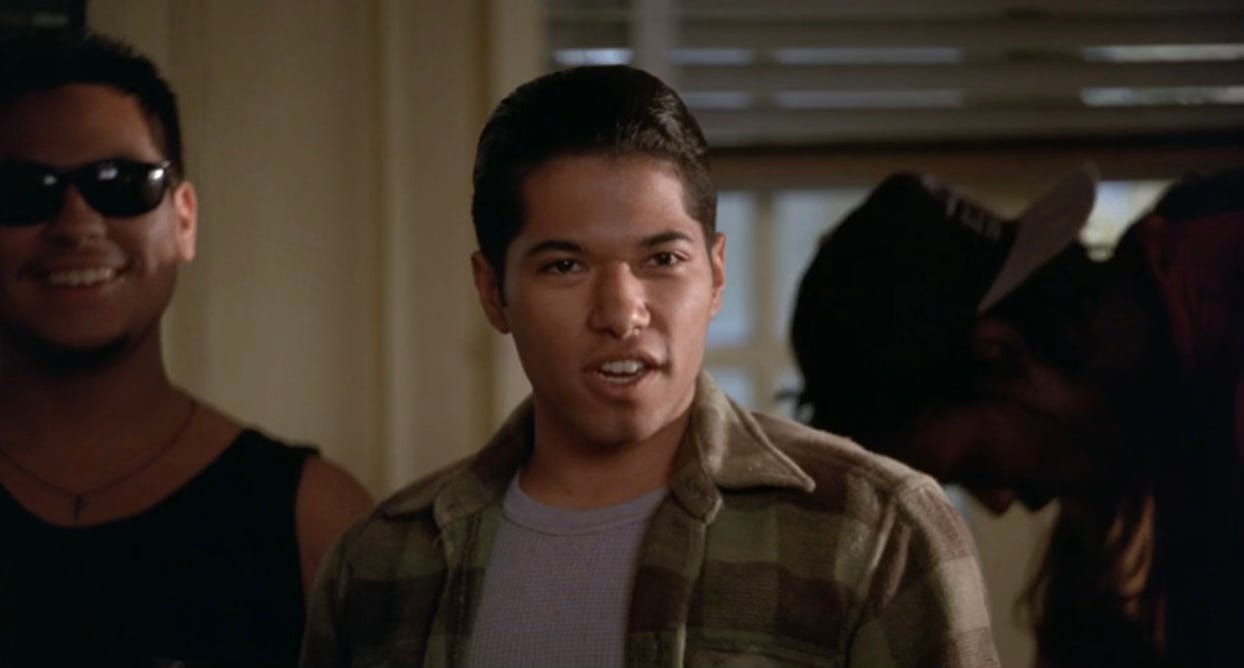
9:26: Renoly Santiago is here. He plays Raul, one of the students Miss Johnson ends up taking a special interest in. I’ve always kept a space in my heart for Renoly, mainly because he had a 22-month stretch in the mid-90s where he just kept popping up in movies that I loved. He did Dangerous Minds in August of 1995 (fuck yes), Hackers in September of 1995 (fuck yes), Daylight in December of 1996 (I did not love this movie, or even like it, really, but I did watch it, and I was happy when he showed up), and Con Air in June of 1997 (fuck yes).
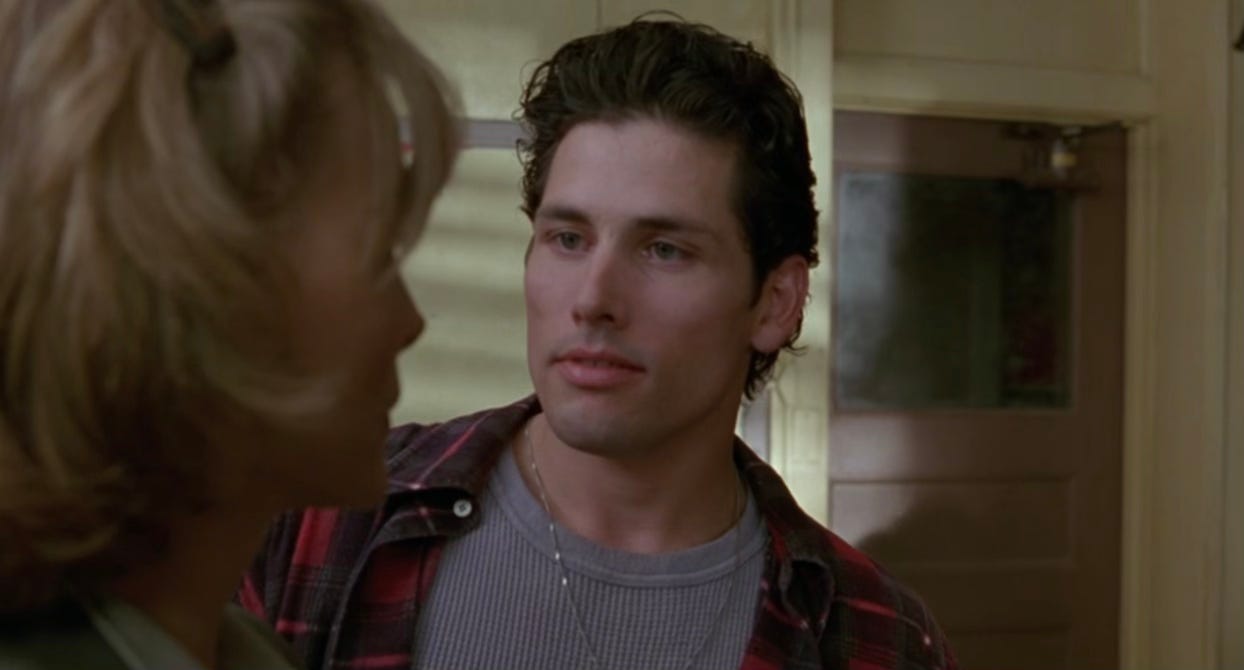
9:55: Wade Dominguez is here. He plays Emilio, the alpha predator in the class.6 He’s the one responsible for setting the tone for everyone. And at this particular moment, he has decided to test Miss Johnson’s resolve by encroaching on her personal space and lobbing a few gently sexist remarks at her. When she tries to exercise a tiny amount of discipline, he stares her down, inspiring cheers from the other students, who begin chanting his name. Which is why…
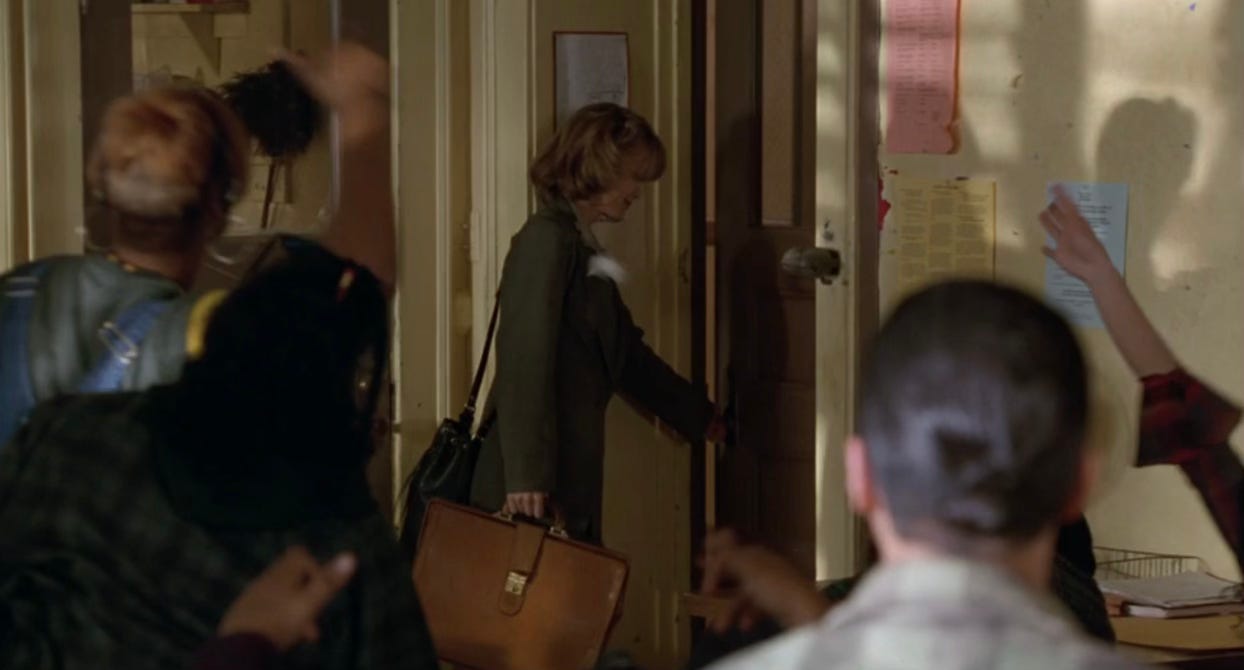
10:51: …Aaaaaaaaaaaaand Miss Johnson just got run off. The students were too much for her to handle. No greater argument has been made about teachers deserving to be paid more than the fact that Michelle Pfeiffer was able to survive two separate marriages to two separate high-ranking drug dealers through all of Scarface but couldn’t last literally three minutes in a high school classroom.
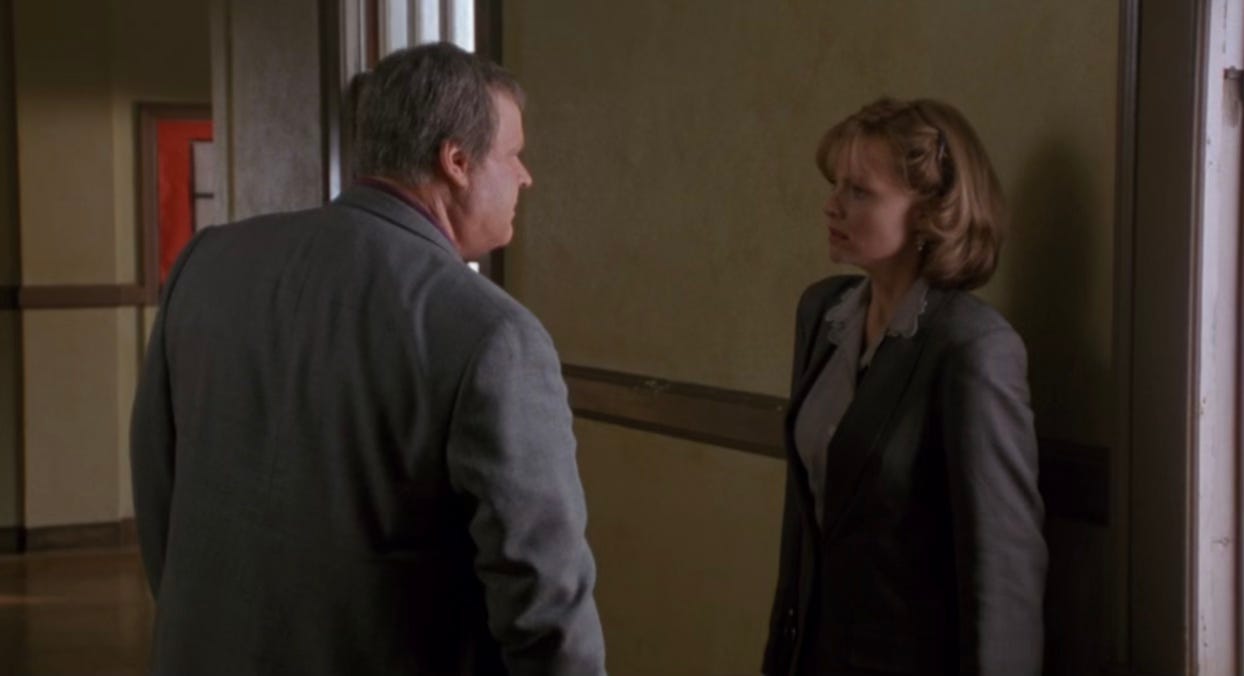
11:49: A good teacher nugget happens right here: Miss Johnson is complaining about how there’s no way for her to teach her class, at which point a co-worker and close friend of hers (another teacher on campus—Mr. Griffith, played by George Dzundza), says to her, “Yes, you can. All you gotta do… is get their attention.” My trick when I was teaching was I’d always just set something on fire (I was a science teacher). Setting something on fire has a 100% approval rating among kids.
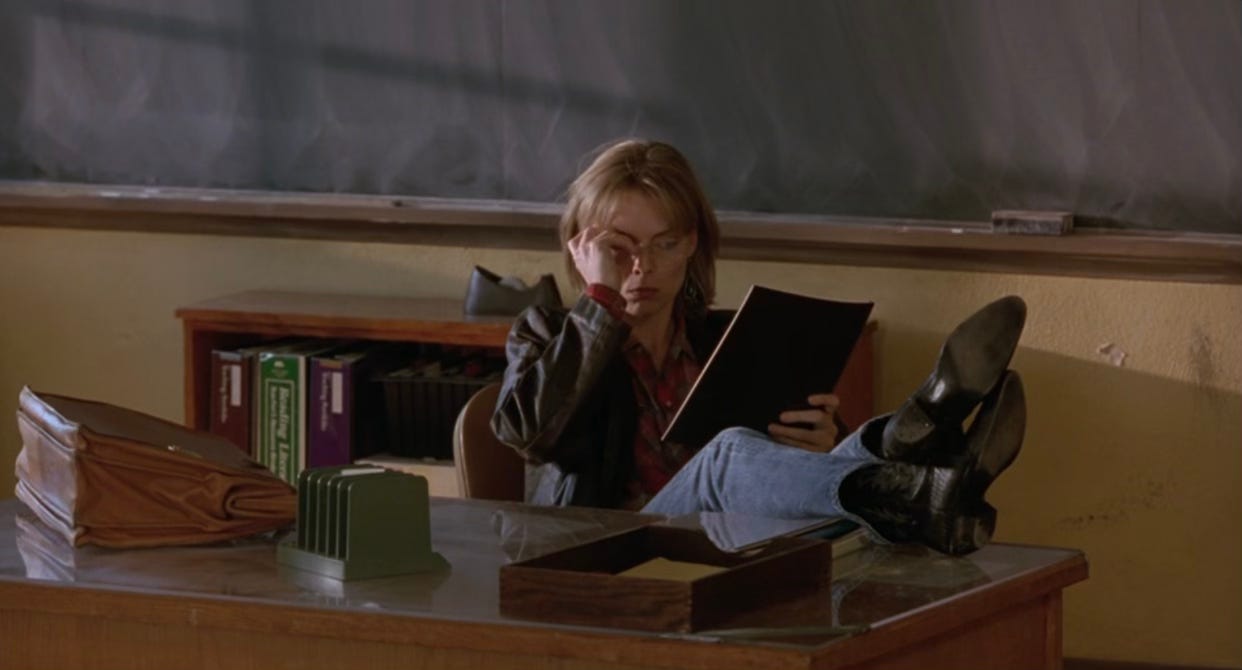
13:43: Miss Johnson means business now, which is a thing I know to be true because she’s ditched her business attire and is now wearing jeans, a leather jacket, and leather cowboy boots. (She’s also, I’d like to point out, inside the classroom before her students are. It’s fucking go time, baby.)
13:44: P.S. Teachers in movies and TV shows fucking LOVE putting their feet up on their desk. It’s the number one movie for fictional teachers who wanna show their students that they’re not like the other teachers.7
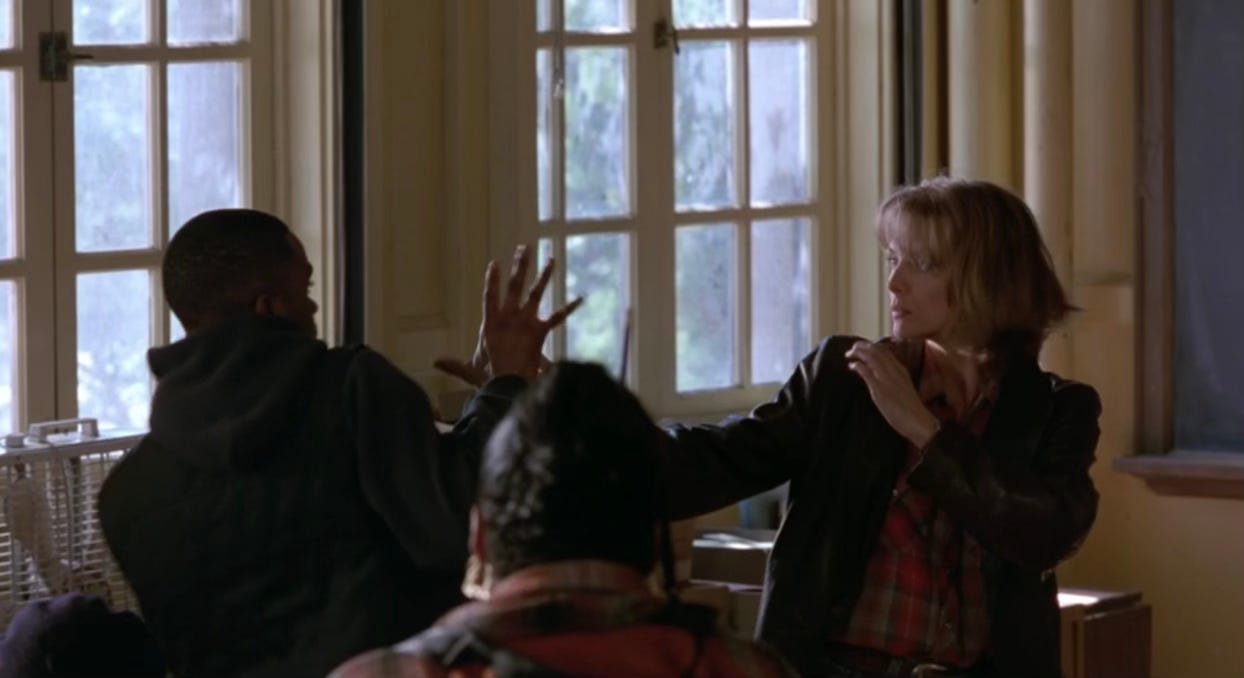
17:43: Miss Johnson’s strategy to get the class’s attention: She tells them she’s a former U.S. Marine and then teaches a couple of students some karate moves. And this is gonna sound completely ridiculous when I say this, but I am firmly of the belief that Ridley Scott watched this scene, saw Michelle Pfeiffer drop down into this Marine fighting stance, was like, “SOMEBODY GET A PRODUCTION COMPANY ON THE PHONE RIGHT FUCKING NOW! I’M MAKING A WOMAN MARINE MOVIE!,” and that’s how we got G.I. Jane in 1997.
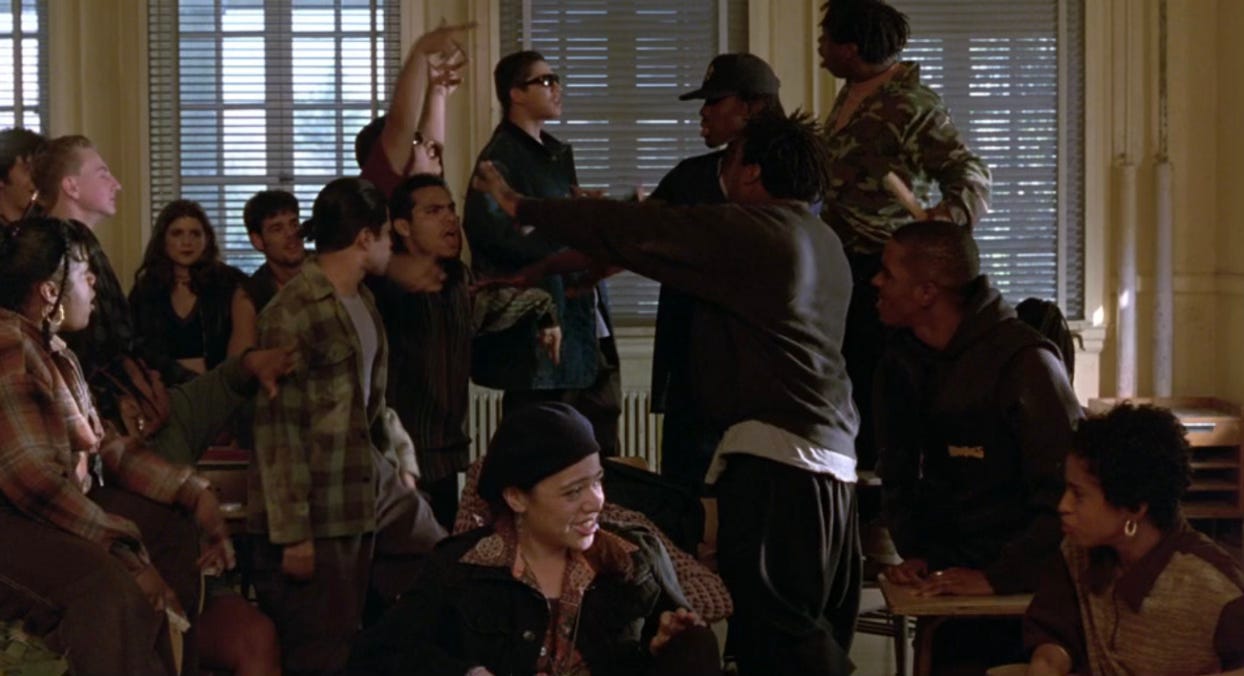
17:44: The karate demonstration nearly spirals into a race war between the Mexican and Black students, which is bad news for Miss Johnson because one of the main things you should try to not do when you’re a teacher is incite a race war.
