


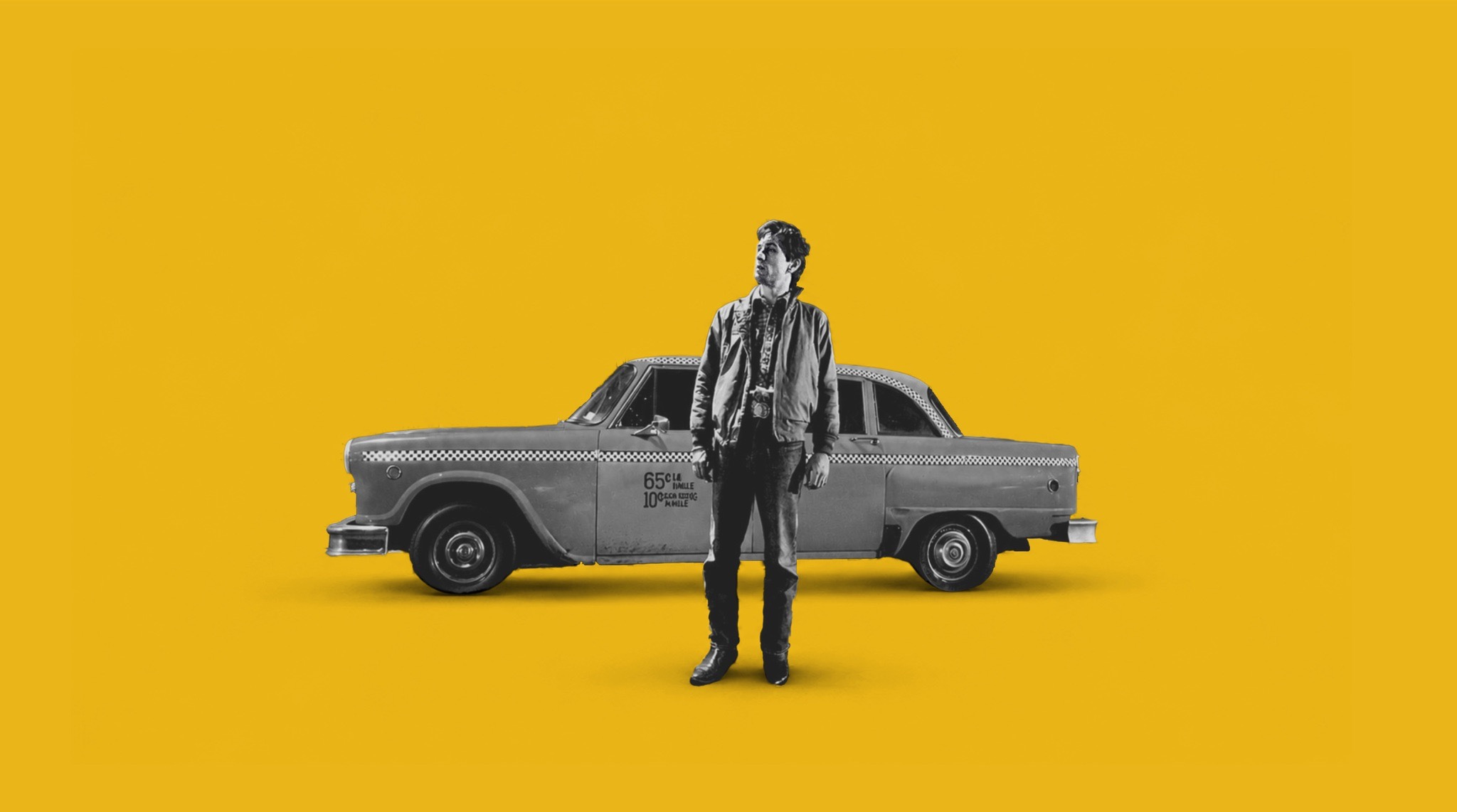
Directed By: Martin Scorsese
Other Notable Films From Scorsese: Goodfellas, The Departed, The Wolf of Wall Street
Starring: Robert De Niro, Jodie Foster, Albert Brooks, Harvey Keitel, Cybill Shepherd
Screenplay By: Paul Schrader
Movie Synopsis: In 1970s New York City, a lonely cab driver suffering from insomnia unravels into madness.
Signature Line: “You talkin’ to me?”
THE INTRODUCTION
An accounting of time, and people, and context
Taxi Driver, the fourth movie in Martin Scorsese’s filmography1 and the director’s first unquestionable masterpiece, is many things.
It’s a deeply affecting exploration of the compounding effects of loneliness. And it’s a pointed commentary on the relentlessness of urban decay. And it’s a bleak depiction of what happens when disturbed men unleash their depravity on the people around them. It’s even a critique of the failures of various American institutions, including but not limited to a government that abandons its veterans and a media ecosystem that exacerbates (and in some instances, actively celebrates) a violence it doesn’t fully understand. And that’s to say nothing of the technical mastery on display in the filmmaking itself.
But above all of those weighty considerations, Taxi Driver is, quite simply and profoundly, cool.
It has a cool director (the aforementioned Scorsese, who injects the film with a level of urgency and energy that few directors have ever been able to match). And it has a cool star (a 32-year-old Robert De Niro, who was at the beginning of an all-time great run2). It has a cool premise (a lonely man unravels into insanity). And it has a cool supporting cast (a striking Cybill Shepherd, a precocious Jodie Foster, a venomous Harvey Keitel, a hilarious Albert Brooks, and a wistful Peter Boyle). It has a cool setting (1970s New York). And it has a cool score (Bernard Herrmann’s aching and unsettling jazz backdrop—in particular, the haunting saxophone at its center—is as good in establishing the film’s mood as any score has ever been).
All of its parts—every single element—are COOL. And so the natural question becomes: How? How do you make a movie like that?
Three or so decades after Taxi Driver’s release, Scorsese filmed a commentary for a collector’s edition DVD re-release of the movie. And early on in the video, he got as close to giving us an answer as we’ll likely ever get:
“It’s interesting to note,” he said, reminiscing on the compulsion that inspired him, De Niro, and writer Paul Schrader to fight so hard to get the movie made, “it was a film that we didn’t think was gonna be seen by anybody, we just… HAD to make it. We didn’t think it was gonna be successful financially, and it was. We didn’t think it was gonna be recognized critically, and it was. We just HAD to make it.”
THE VIEWING
A timestamped rewatch of Taxi Driver
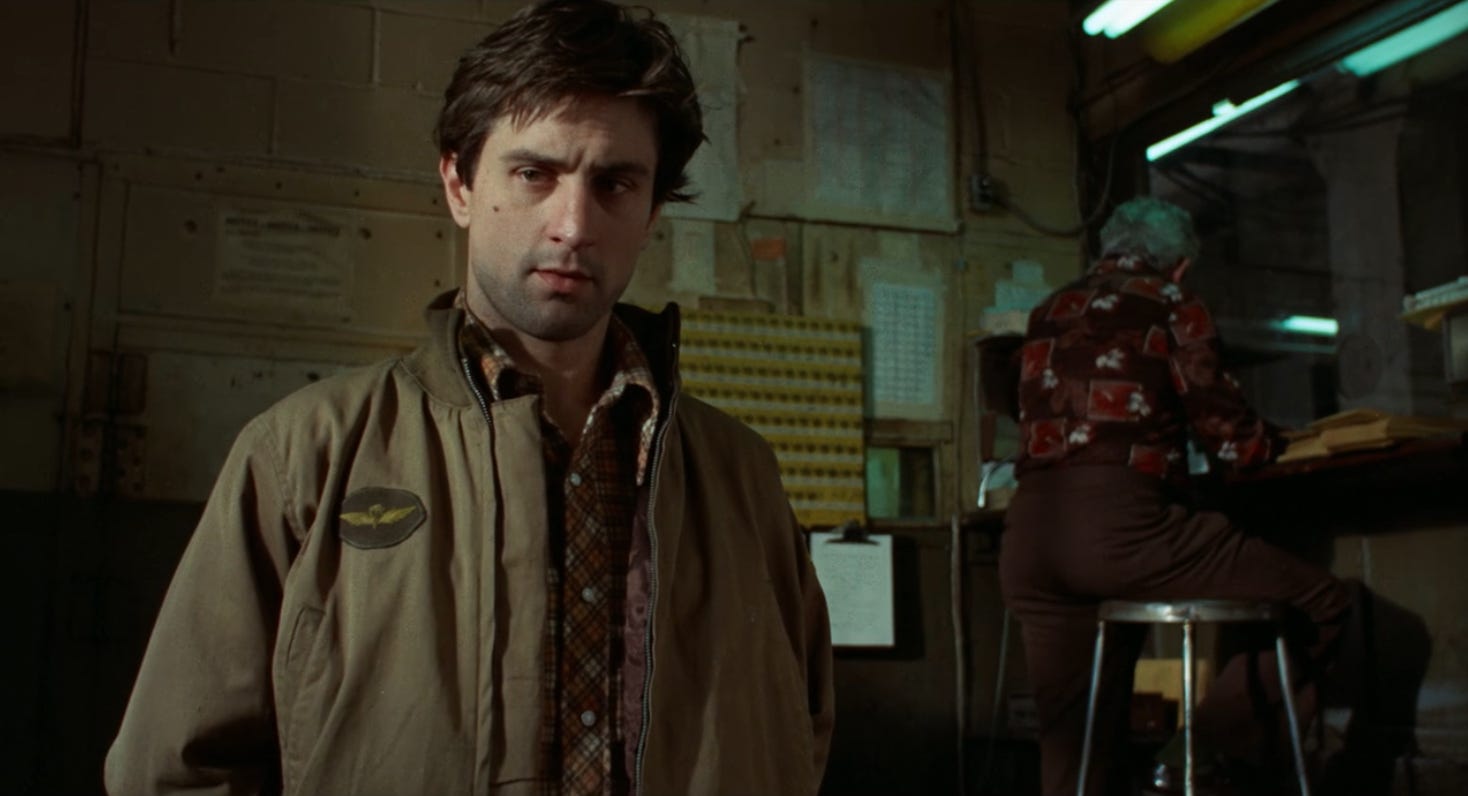
2:23: Robert De Niro is here. He plays Travis Bickle, a Vietnam veteran living in New York who takes a job driving a cab at night because he can’t sleep. De Niro is an absolute dazzler in this. It’s one of the four best performances of his career, and one of the 50 best performances by anyone in any movie ever. He’s an actor in all-caps TOTAL CONTROL. It’s awe-inspiring.
2:24: P.S. One of the things that make De Niro such a delight to write about and think about and talk about is that he has, like, eight or nine different performances that are all knife-fighting for a spot on the FOUR BEST PERFORMANCES OF HIS CAREER list. Here’s my current top four (and I am fully aware that the first place finisher here is controversial):
