

Jackie Brown
Wait. Is this secretly Quentin Tarantino's best movie?

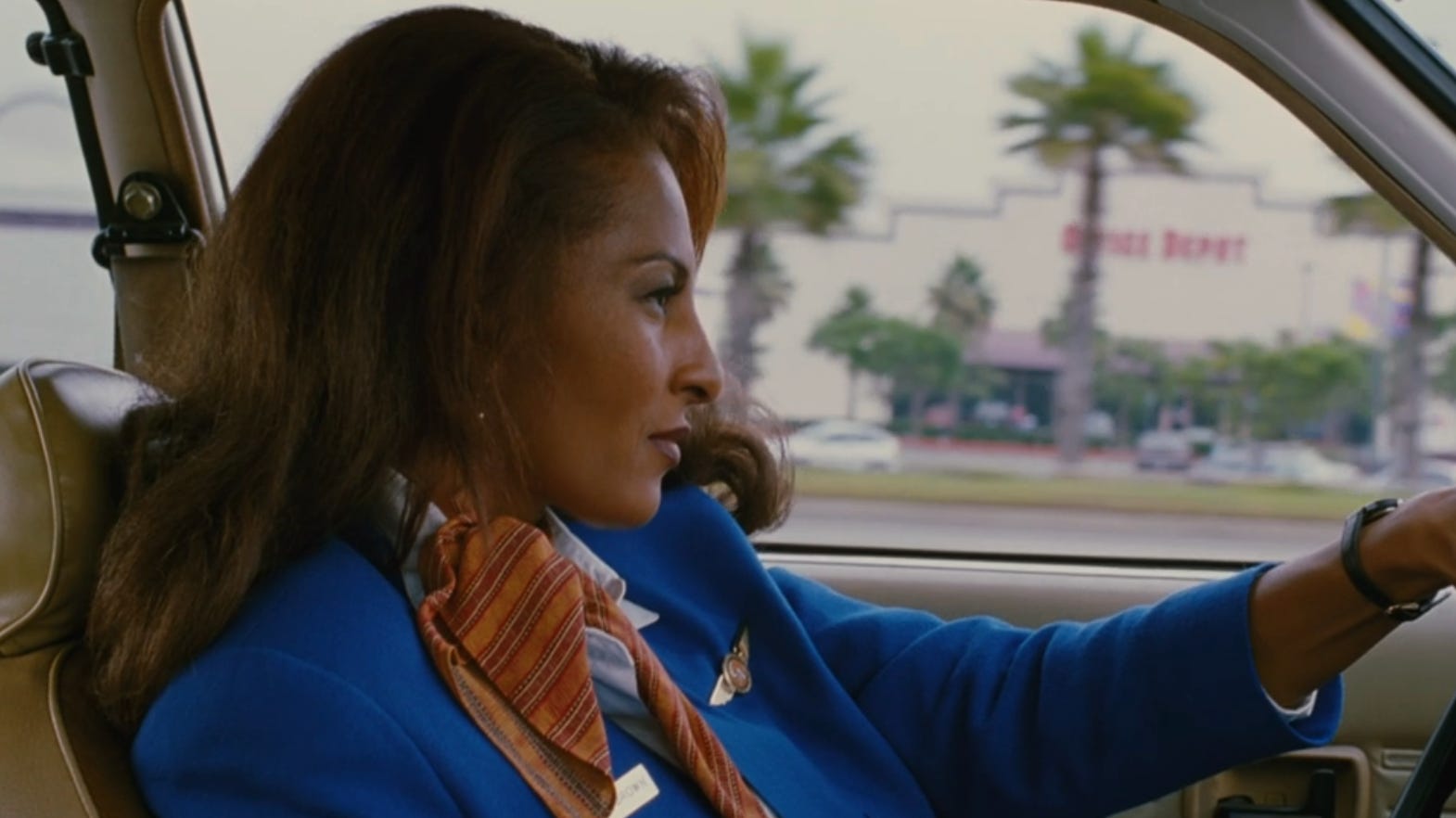
Directed By: Quentin Tarantino
Other Notable Films From Tarantino: Kill Bill, Inglourious Basterds, The Hateful Eight
Starring: Pam Grier, Robert De Niro, Samuel L. Jackson, Bridget Fonda, Michael Keaton, Robert Forster
Screenplay By: Quentin Tarantino, based on the novel Rum Punch by Elmore Leonard
Movie Synopsis: A struggling-to-get-by flight attendant runs a scam to steal half a million dollars.
Signature Line: “When you absolutely, positively got to kill every motherfucker in the room… accept no substitutes.”
THE INTRODUCTION
An accounting of time, and people, and context
When the world met Pam Grier—the captivating star of several wildly popular Blaxploitation films in the early ‘70s—she was an action hero, billed as the woman men were meant to want but fear.
She shot people with cool guns, participated in dangerous car chases, and beat up disrespectful hoodlums in various locations. Her movies had taglines like “…The baddest One-Chick Hit-Squad that ever hit town!”1 and “Wham! Bam! Here comes Pam!”2 and plot lines that involved her enacting revenge3 or taking down corrupt businessmen.4 Being an action vixen was more than just a part of her iconography; it was the genesis of it.
That history is what makes her performance in Jackie Brown, the most critically-acclaimed performance of her career, so mesmerizing. Grier’s Jackie never does anything that could be construed as a quote-unquote “action sequence”—she never shoots anybody; she never fights anybody; she never dives out of the way of a speeding automobile. In fact, the most energetic thing she does in the movie is frustratingly stamp out a cigarette in an ashtray after getting rattled during a conversation. And yet, somehow, Grier still feels just as urgent, and just as dynamic as she did in her action hero movies. It’s a remarkable feat, really, and a testament to Grier’s greatness as an actor.
In Jackie Brown’s penultimate scene, Jackie is on her way out of the country when she meets with the man she’d worked with to scam a vicious gunrunner and the ATF agent desperate to arrest the criminal. After they talk for a bit, Jackie asks the man, who has been in love with her since the first time he saw her, if he’d like to accompany her on her trip. He smiles softly, then declines the invitation. She angles her eyes at him in a flirtatious manner, then asks, “Are you scared of me?” He smiles another soft smile, holds up his index finger and thumb an inch or so apart from each other, then warmly admits, “A little bit.”
Jackie gets up from her chair, walks up to him, slowly kisses him, and then leaves. It’s a perfect ending to the movie, and also a perfect referendum on Grier’s filmography:
Pam Grier has always been in control; the guns were just for show.
THE VIEWING
A timestamped rewatch of Jackie Brown
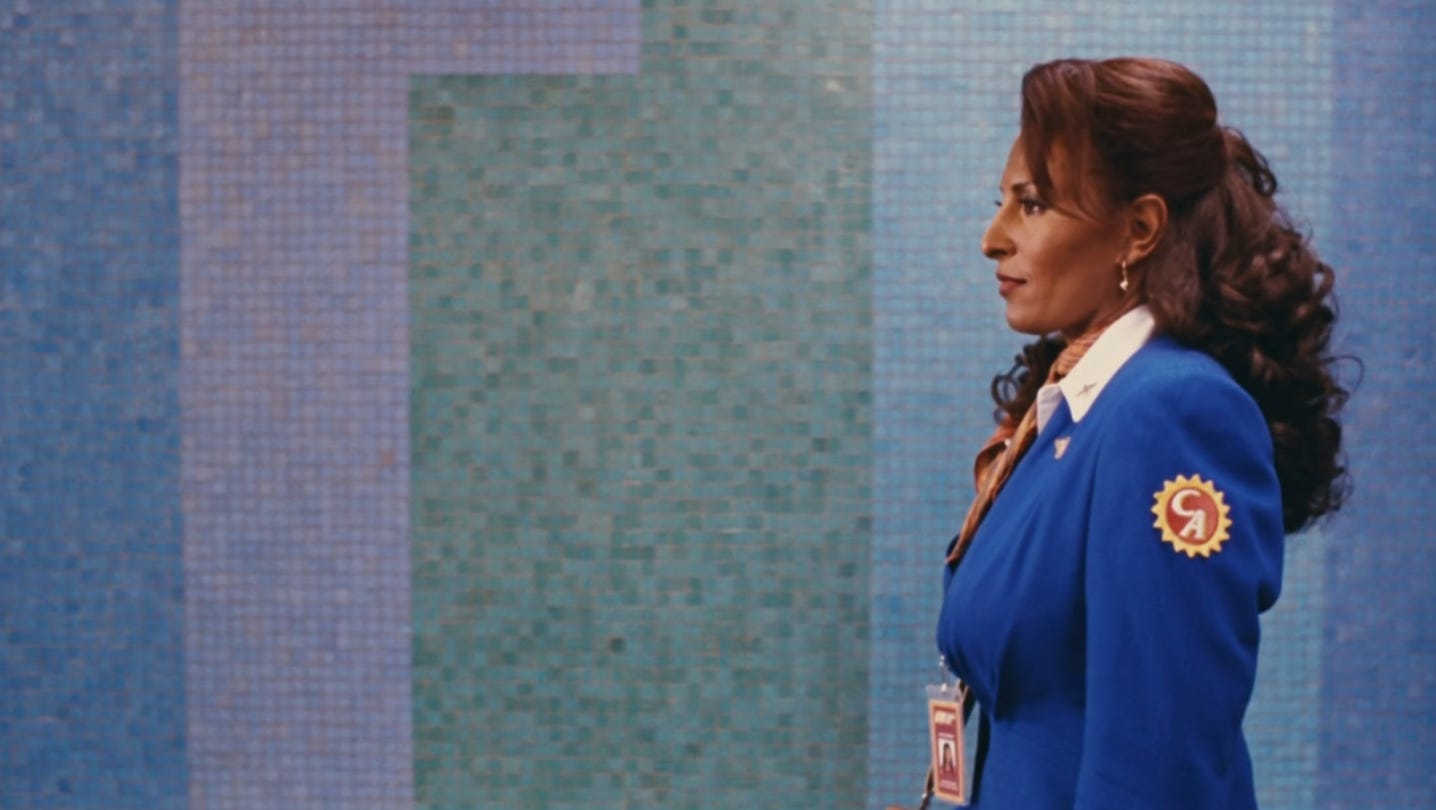
0:53: Pam Grier is here. She plays Jackie Brown, a flight attendant who regularly smuggles money from Mexico for a low-level gunrunner in Los Angeles. So much of this movie is just Quentin Tarantino holding a camera on Grier as she walks from one place to another (the movie literally opens with a three-minute long sequence of her gliding through an airport). It’s a very smart use of runtime. The camera has always loved Pam Grier, so why not lean into that? If you’ve got 2001 Shaq on your team, you get him the ball in the post as many times as you can, you know what I mean?
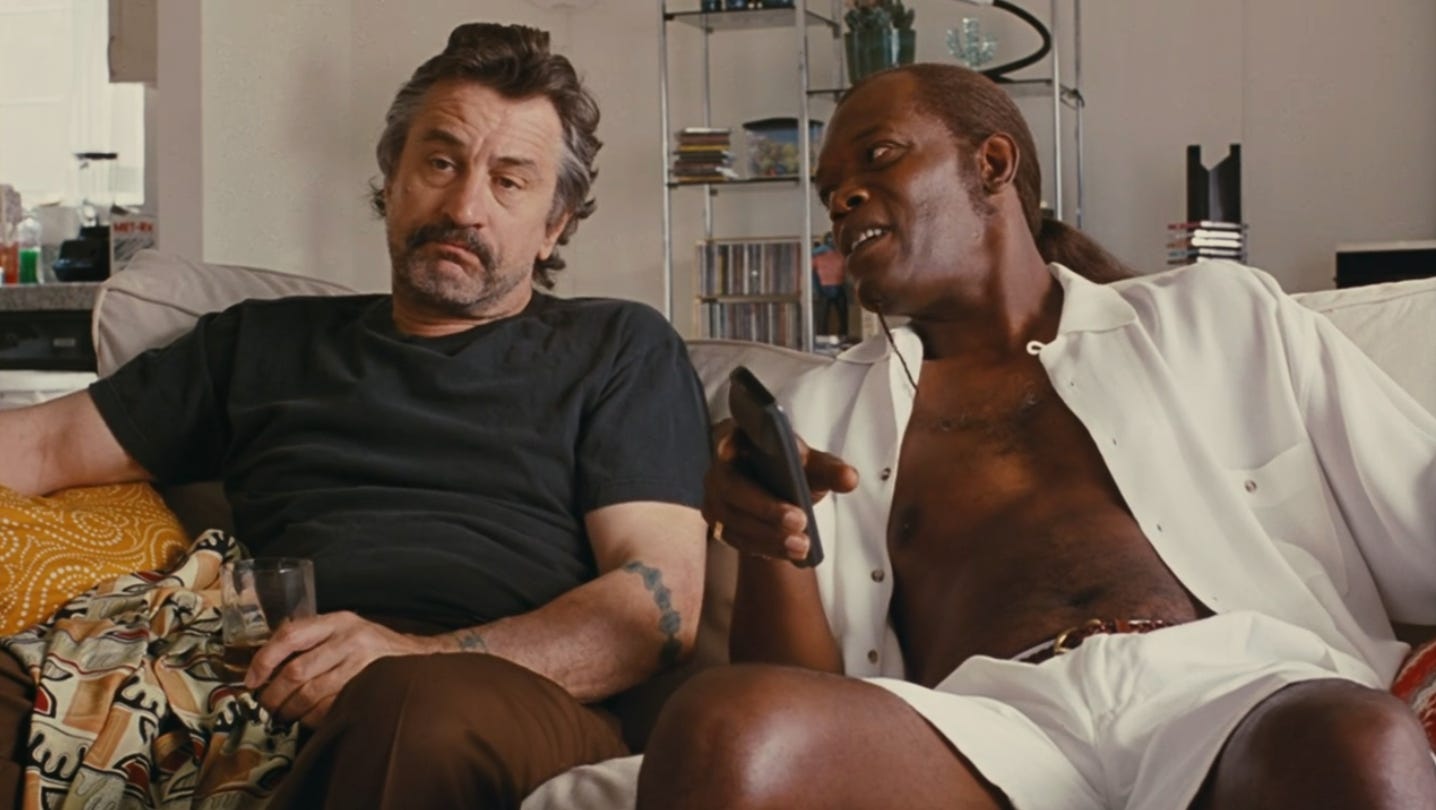
4:28: Robert De Niro and Samuel L. Jackson are here. Jackson plays Ordell Robbie, the gunrunner Jackie works for. De Niro plays Louis Gara, a beleaguered ex-con who was once Ordell’s cellmate. Three things to mention here:
First and foremost, Sam Jackson’s hair is fucking ridiculous. You can either have a ponytail, OR long sideburns, OR weird facial hair, but you absolutely cannot have all three at the same time.
I really enjoy this performance from De Niro. It’s such a stark contrast to the energy of his most iconic roles. In films (Heat, Goodfellas, Casino, etc.), he always felt like a winner, and like he was the coolest guy in whatever room he happened to be standing in. Here, he plays a dud, and he does it absolutely perfectly. It’s a wonderful weaponization of the audience’s history with De Niro.
I all-caps LOVE this performance from Jackson. He’s charming without ever feeling inauthentic and menacing without ever being cartoonish. It’s awesome. His turn as Jules Winnfield in Pulp Fiction will always be the first-place finisher in any WHAT’S SAM JACKSON’S BEST PERFORMANCE conversation, but his spin as Ordell here is a lot closer to the trophy than most people think.5
5:30: As Ordell and Louis discuss selling black market guns, Ordell explains that movies often influence what type of gun people want to buy, citing a bump in sales of a specific gun following the release of John Woo’s 1989 gun-fu masterpiece The Killer. If I ever get around to buying a gun, it will 100 percent be because I was inspired to own one I saw in a movie. I’m gonna walk into an artillery shop somewhere like, “Hi, you guys wouldn’t happen to carry those golden pistols that Nic Cage had in Face/Off, would you?”
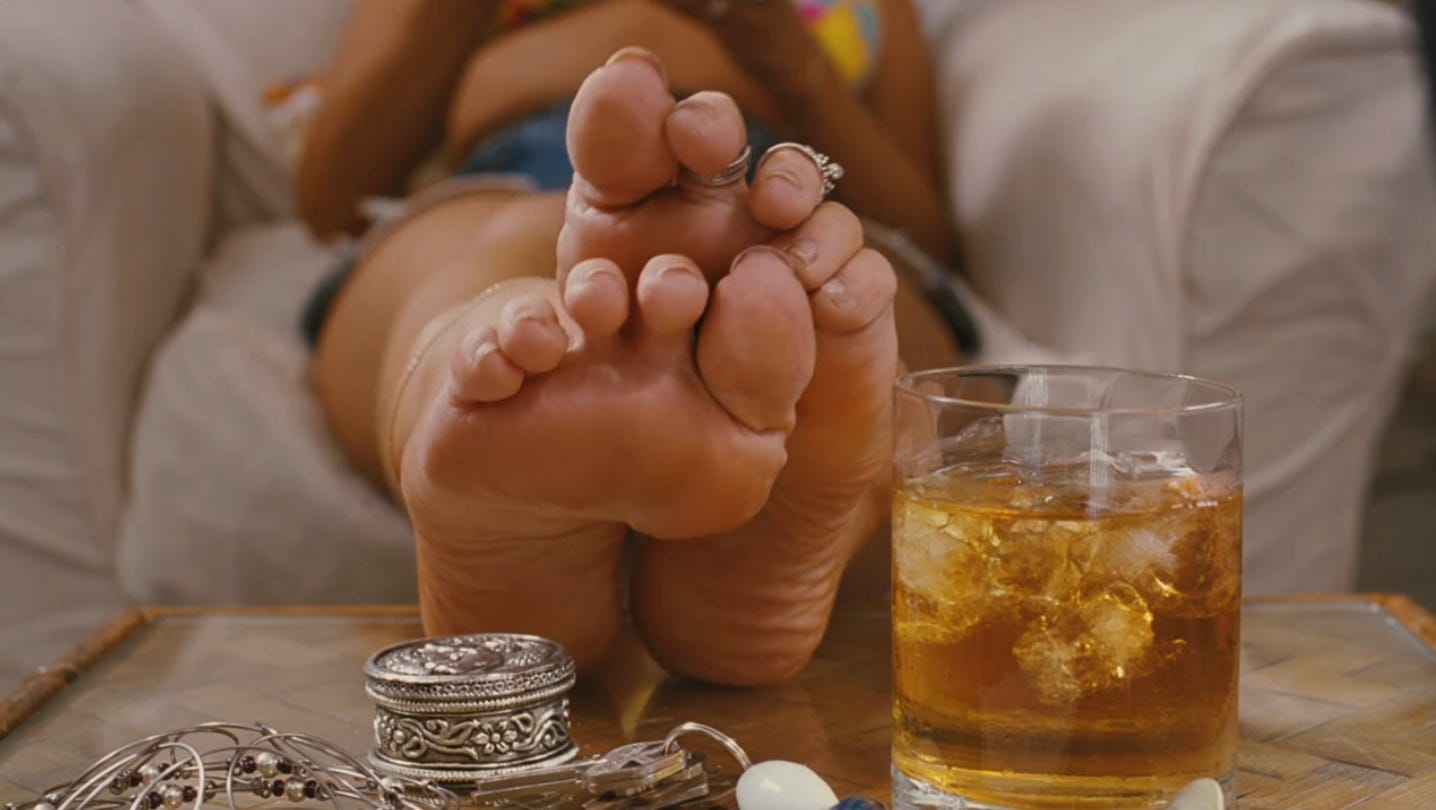
5:55: These feet belong to a character named Melanie (played by Bridget Fonda). And I’m suddenly reminded of the time Brad Pitt won Best Supporting Actor at the 2020 Screen Actors Guild Awards for his role in Quentin Tarantino’s Once Upon a Time in Hollywood and said during his acceptance speech, “Seriously, Quentin has separated more women from their shoes than the TSA.” (This is a real thing that happened. And the camera made absolutely sure NOT to cut to Tarantino when Pitt made the joke, lol.)
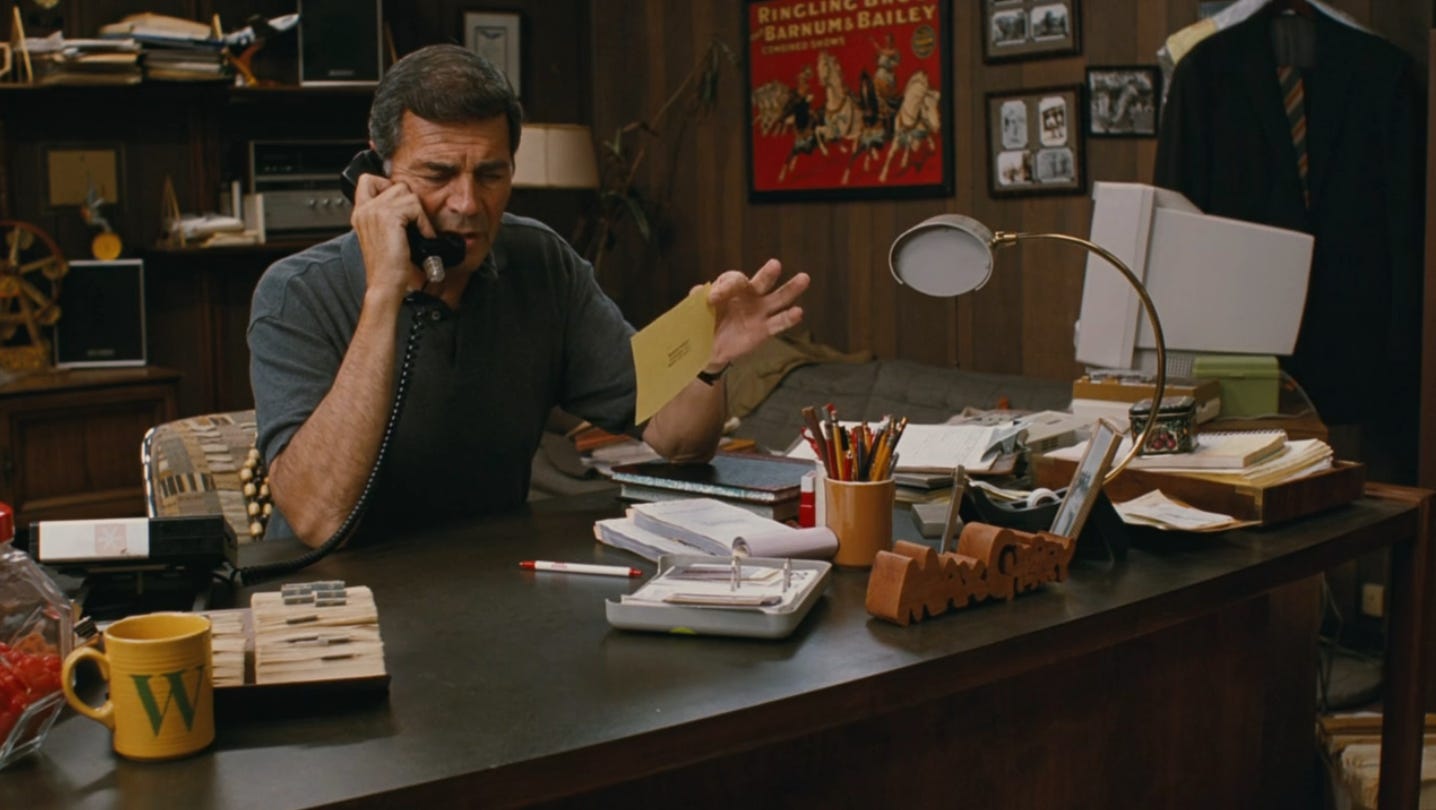
11:02: Robert Forster is here. He plays Max Cherry, a gallant bail bondsman. This is the defining role of Forster’s career, and also one of the five or six best casting decisions ever in a Tarantino film. Forster is perfect in this. He feels precisely like the kind of guy who’d help you move out of your apartment and then respond to you trying to give him some cash by saying something like, “Happy to help out. Buy me a burger sometime and we’ll call it even,” and then shaking your hand and walking away. I love him here. I wouldn’t change one single thing about his performance.
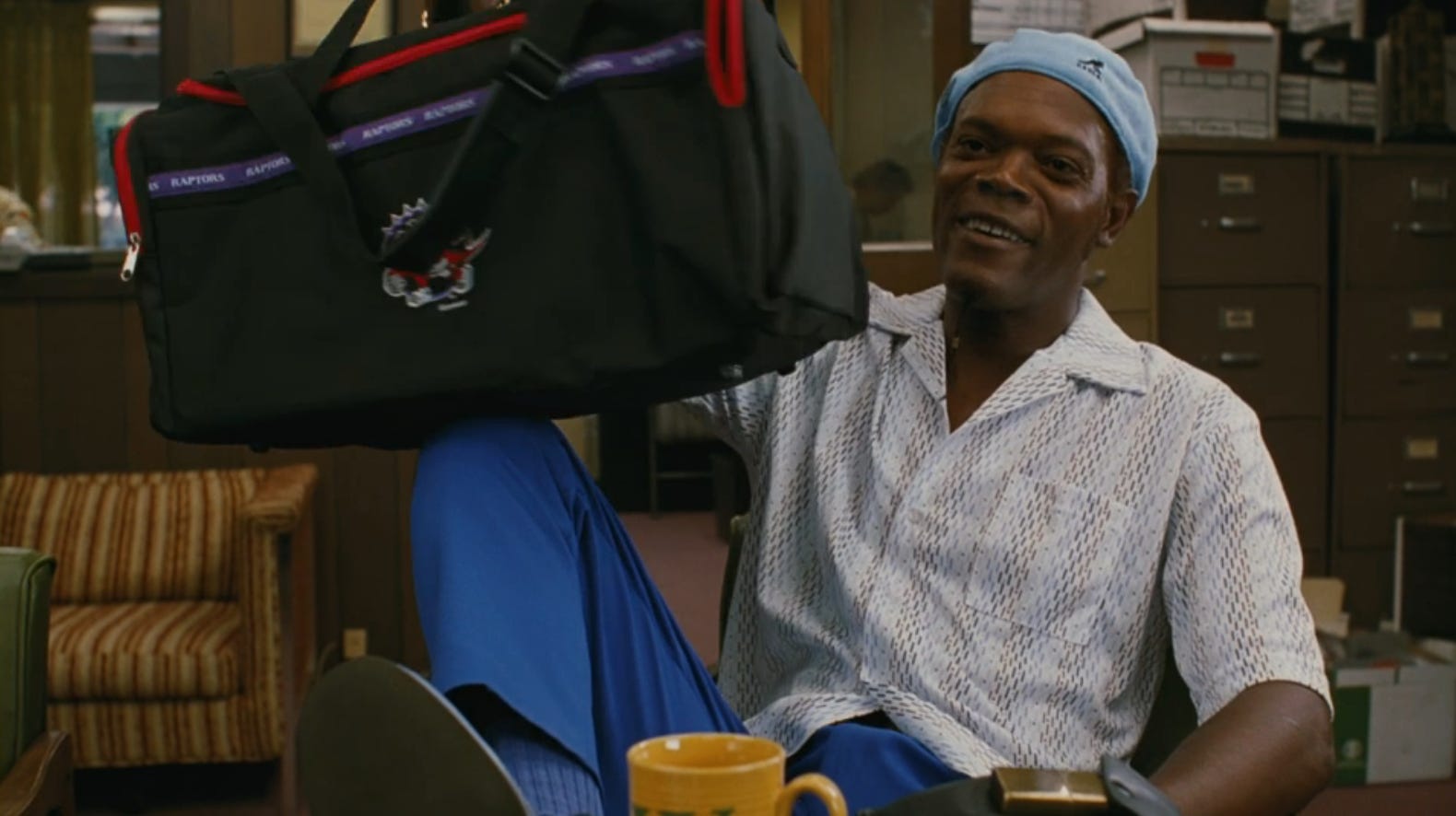
12:45: This movie takes place in 1997.6 And that makes Ordell’s death at the end of it especially sad because it means that despite him having the courage to endure as a long-distance Raptors fan while living in L.A. during the beginning of the Shaq and Kobe era, he didn’t get to live long enough to see his beloved Raptors draft Vince Carter. What a shame. I bet he would’ve had so much fun watching the 2000 Dunk Contest.
12:46: P.S. There are a ton of Easter eggs in Jackie Brown. Rather than hit each of them as they pop up, I’m just gonna list my six favorites here. Did you know…
Jackie drives the same car in Jackie Brown (a white 1980 Honda Civic) that Butch does in Pulp Fiction.
There’s a scene about 80 minutes in where Max exits a theater after watching a movie. The song playing during the credits of that movie is actually an original song from the Jackie Brown soundtrack. So, technically, he was in Jackie Brown watching Jackie Brown.
If you pause the scene where Ordell is talking on the phone while looking in his fridge (around the 10 minute mark), you can see that one of the photos on the fridge is a picture of Sam Jackson sitting naked in a bathtub.
We never physically see Quentin Tarantino in Jackie Brown, but he does have a quick cameo: The voice on Jackie’s answering machine is his.
There’s a part where Melanie is watching a movie called Dirty Mary Crazy Larry (around the 62 minute mark). One of the stars was Peter Fonda, Bridget’s father.
Max tells Jackie at the end of the movie that he’s 56 years old. However, earlier in the movie, we get a quick glimpse of Max’s bail bondsman ID card and it lists his birthday as March 15, 1948. That puts him in his 40s rather than his 50s. So he either lied to Jackie or he lied while getting his ID card. (I’m not so sure this technically counts as an Easter egg, but I find it interesting so I’m including it.)
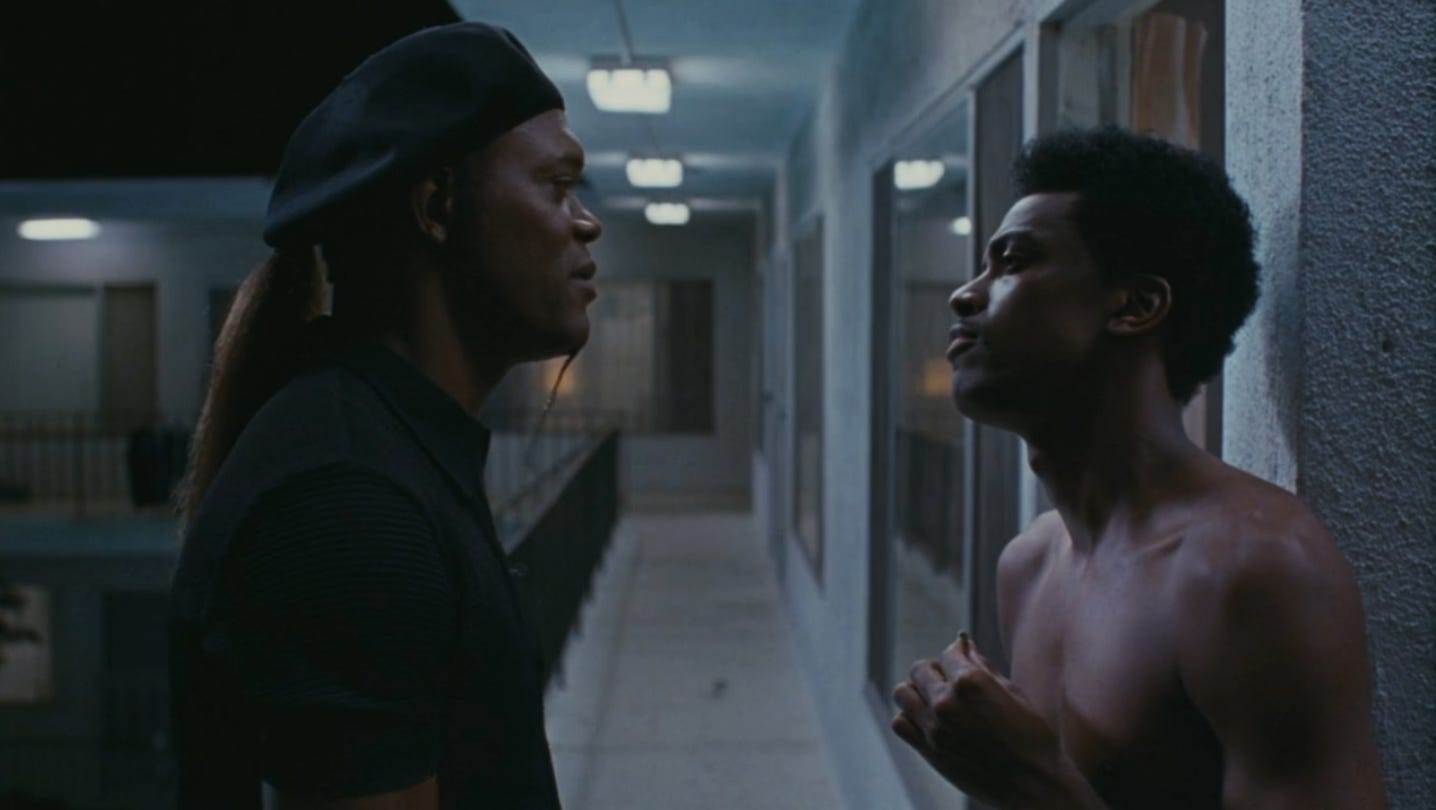
16:34: Chris Tucker is here. He plays Beaumont Livingston, a recently arrested employee of Ordell’s. What a run Chris Tucker had in the mid-to-late ‘90s: He did Friday and Dead Presidents in 1995, then followed that with The Fifth Element and Jackie Brown in 1997, then capped it off with Rush Hour, the first film in an action-comedy trilogy that would eventually make $851 million at the box office.
19:06: Ordell wants Beaumont to be his back-up for a deal that involves selling some guns to a group of Koreans. As he lays out the details, he says, “Now, I ain’t worried, ‘cause by and large, Asians are very dependable, you know? They don’t want no trouble.” We can add this to the list of Vaguely Good Stereotypes found in the movies we’ve watched so far. (As it stands now, the list is just this one and the one in No Country for Old Men where the one cop says that coyotes don’t eat Mexicans.)
19:07: P.S. Make sure you subscribe to Hannah’s soon-to-be-launched GOOD MOVIE spinoff newsletter, GOOD STEREOTYPES.
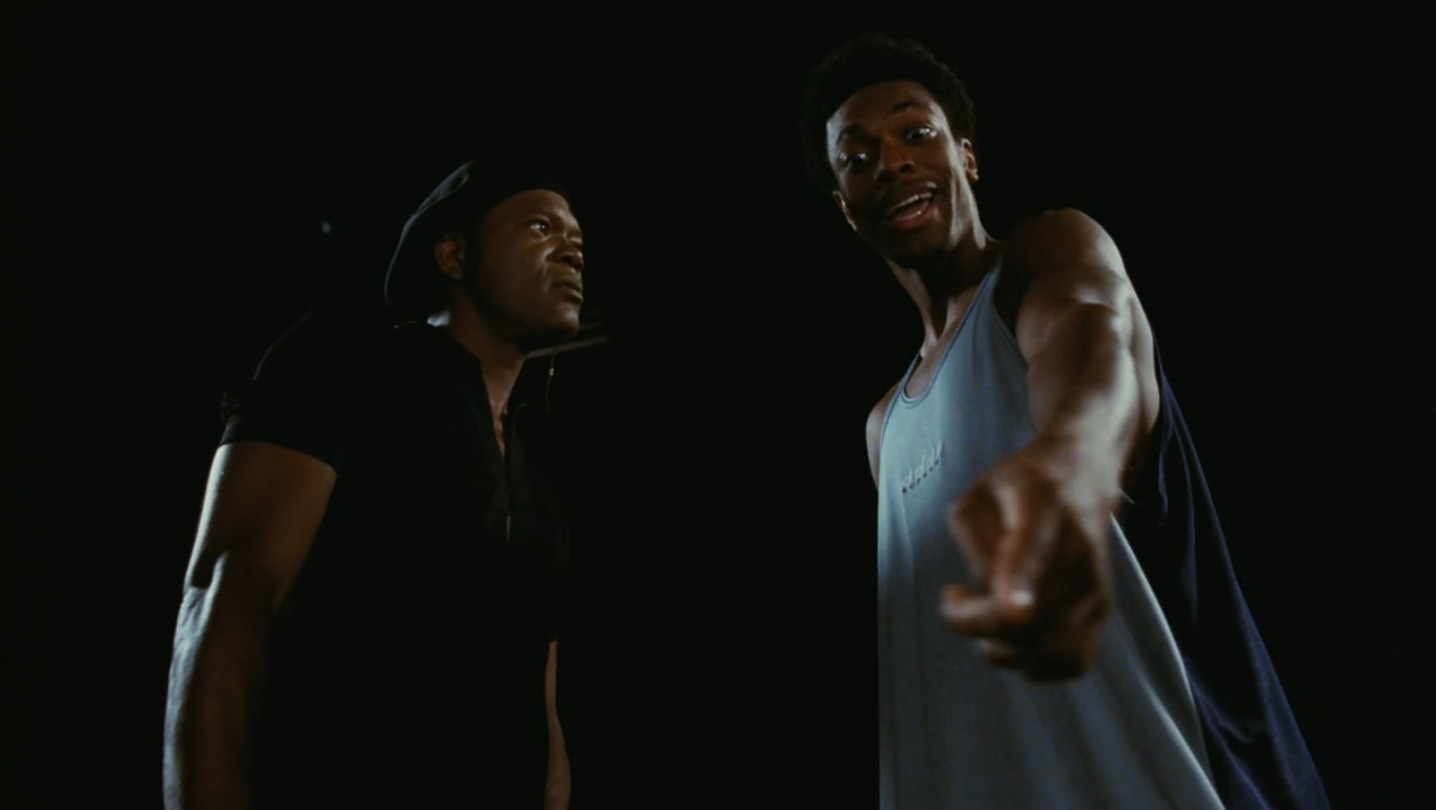
19:59: It took less than 20 minutes for Tarantino to get his signature foot shot AND his signature from-inside-the-trunk shot into Jackie Brown. Incredibly efficient work.
20:00: P.S. Beaumont should’ve known Ordell was gonna kill him as soon as Ordell started trying to talk him into getting into the trunk of Odell’s car. The only person who has ever climbed into another person’s trunk and had things turn out even remotely okay for them was Johnny Drama in Entourage when the guys were trying to sneak him into the Playboy mansion.
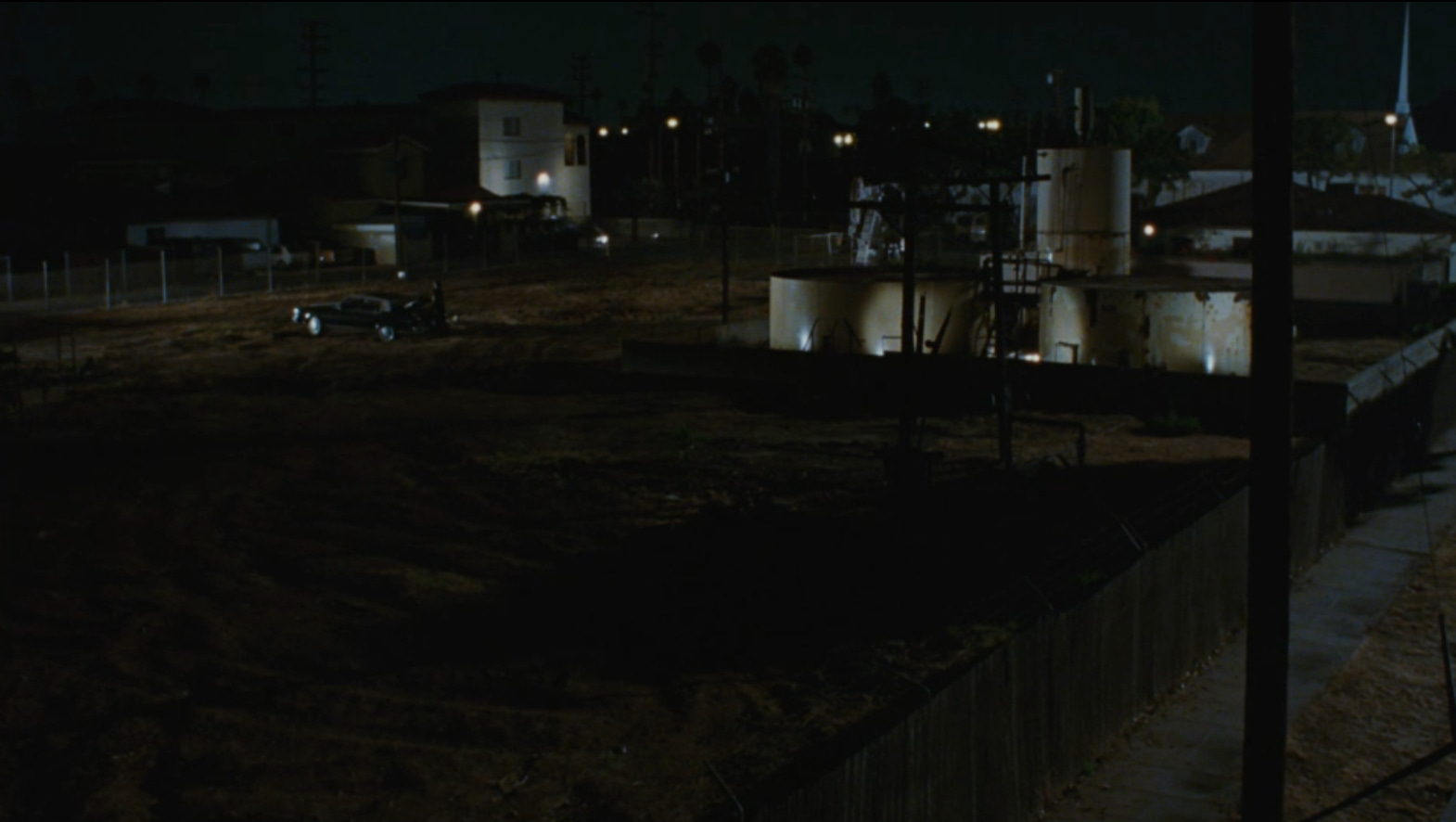
23:07: …Aaaaaaaaaaaaand Beaumont is dead. Ordell drove around the block, parked the car, then got out and shot Beaumont while he was in the trunk.
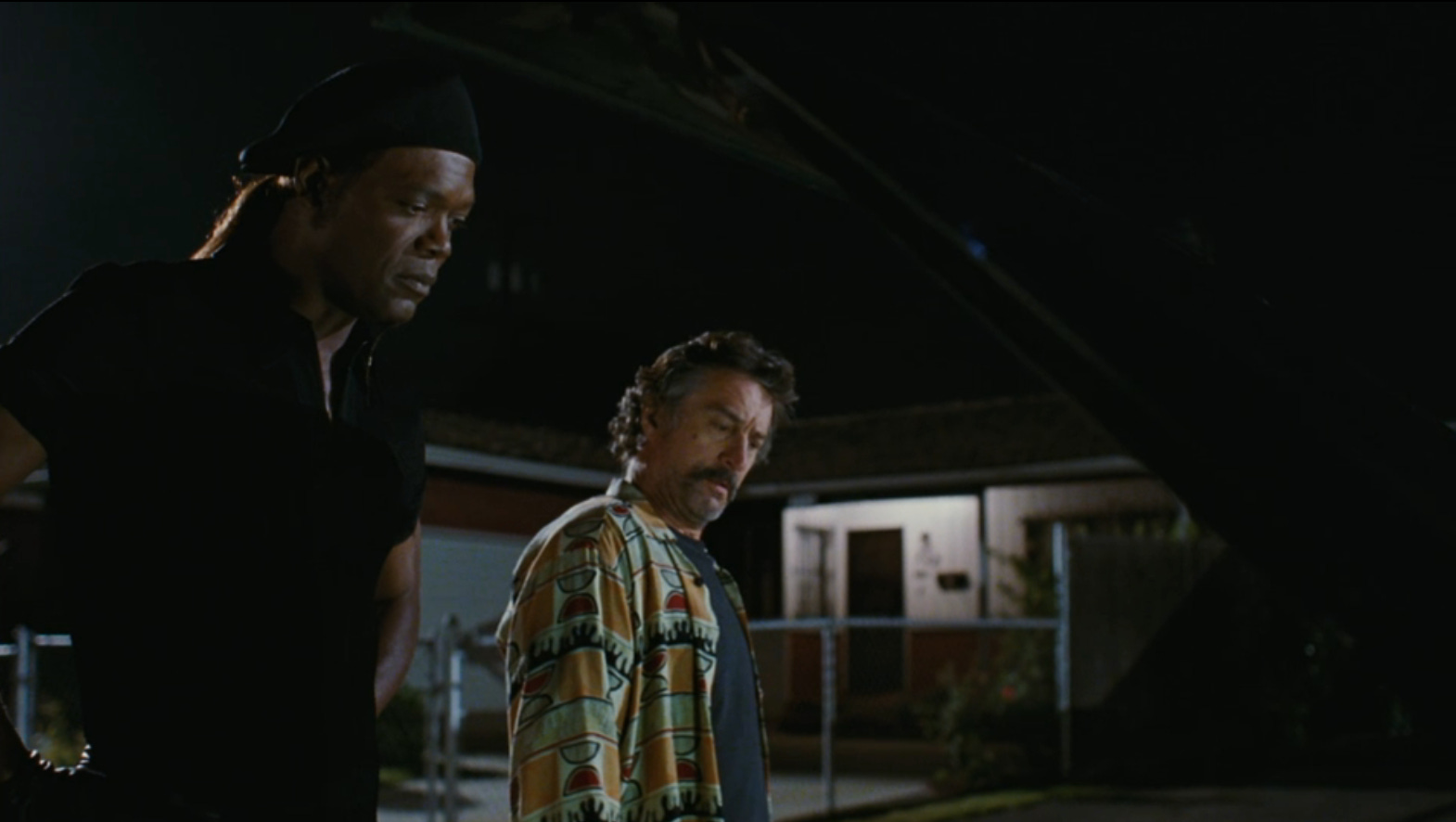
26:04: Ordell, looking to intimidate Louis (who’s just begun working for him), drove Beaumont’s body to Louis and showed it to him, which led to this conversation:
LOUIS: Who’s that?
ORDELL: That’s Beaumont.
LOUIS: Who’s Beaumont?
ORDELL: A employee I had to let go.
Coincidentally, we have this same termination policy at GOOD MOVIE. There was actually a fourth person who worked on GOOD MOVIE back when me, Hannah, and Richie were first starting up (a young fact-checker named Cecilia). But she was late with two assignments in a row, and so Hannah put her in a trunk. That’s why Richie and I are always on our best behavior each week.
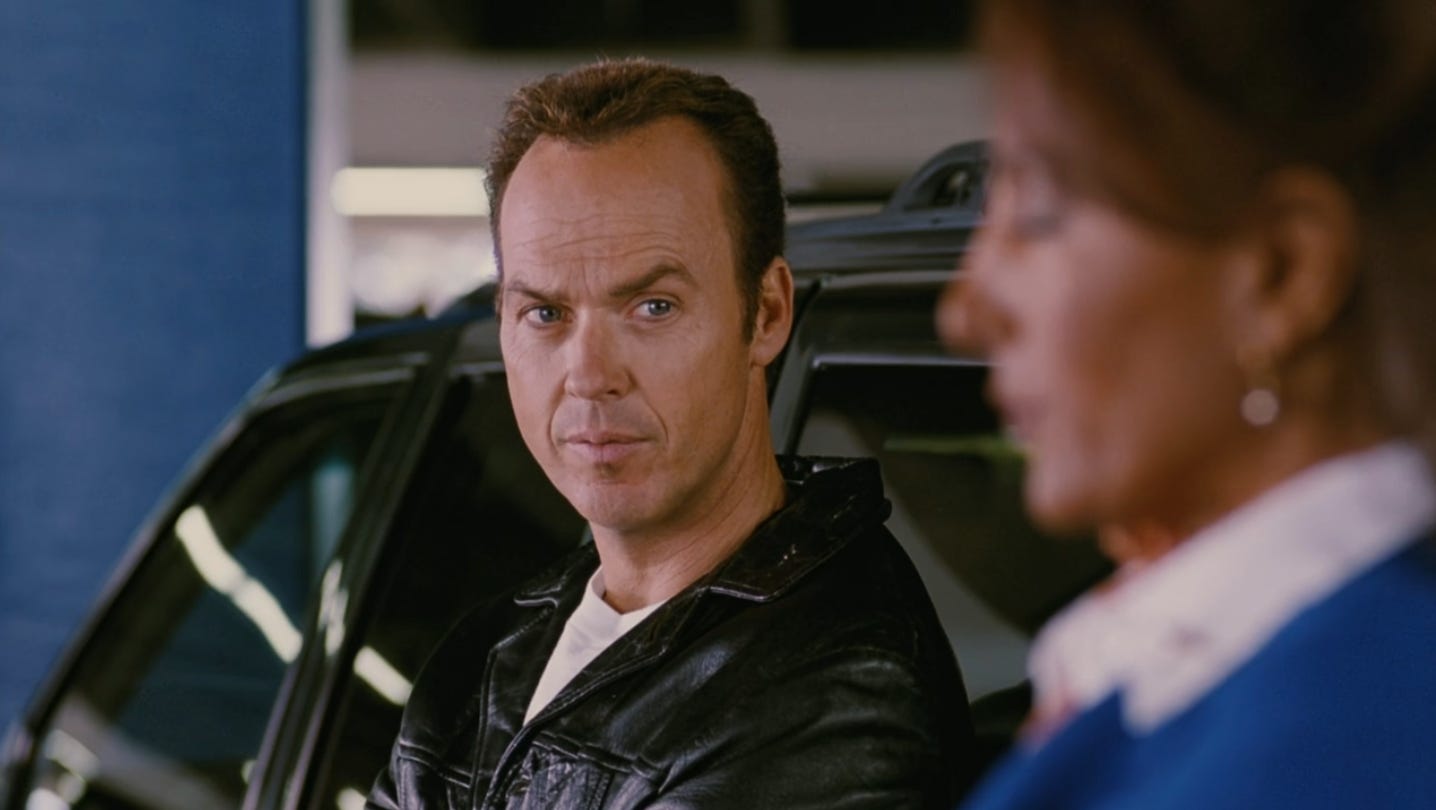
29:12: Michael Keaton is here. He plays Ray Nicolette, an agent working for the Bureau of Alcohol, Tobacco, Firearms and Explosives (ATF). He knows that Jackie regularly smuggles money into America for Ordell, so he’s dangling a prison sentence over her head to get her to help him take down her boss. Michael Keaton has such a great face. Every time I see him in something, I sit there waiting for him to turn to someone and say, “…I’m Batman.”
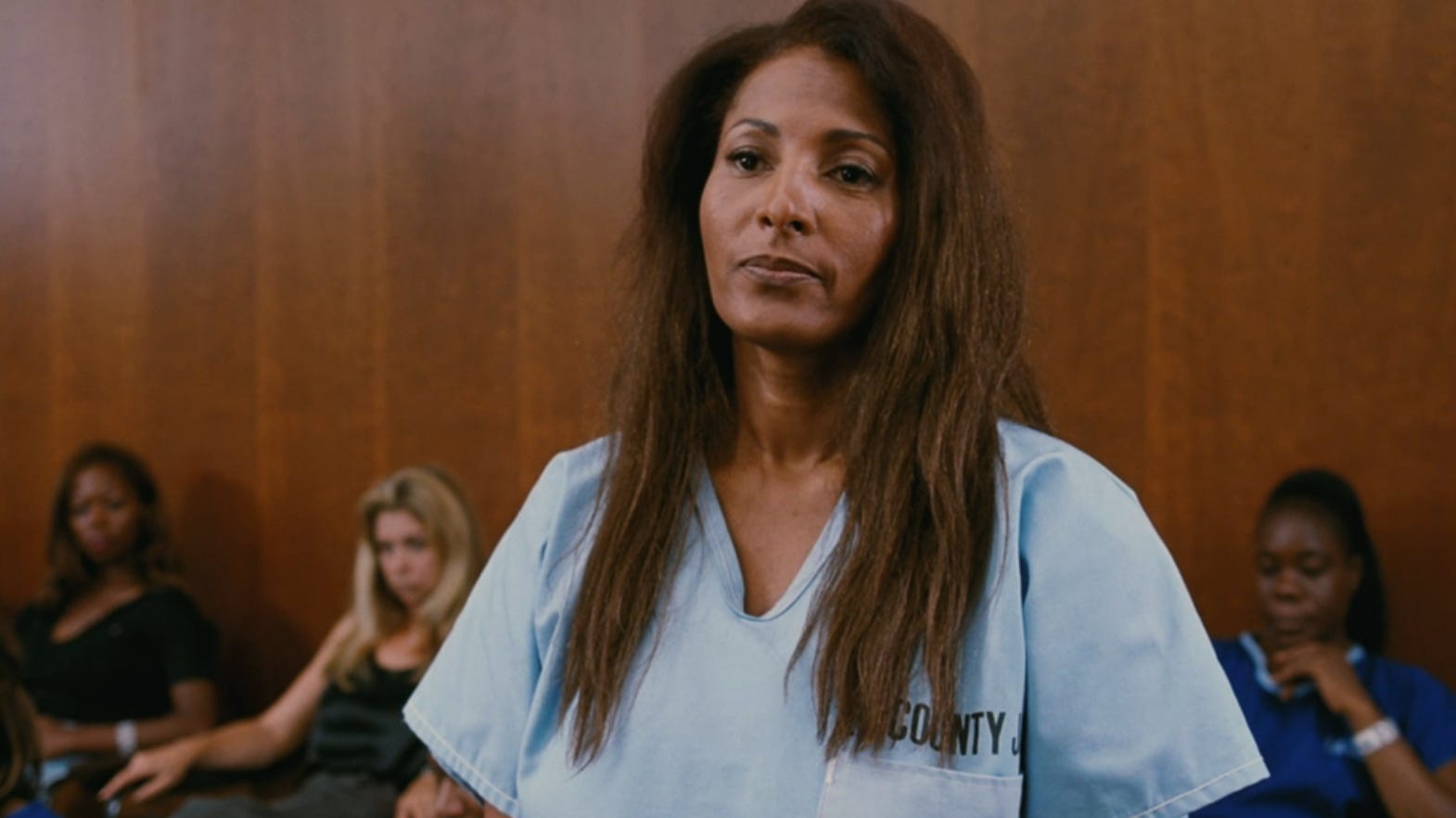
35:33: Four things about this moment here, where the judge sets Jackie’s bond:
I really love how patient this movie is. Tarantino spends nearly 15 minutes on the Ordell/Beaumont storyline at the start of the film just so that audiences understand exactly how much danger Jackie is in when the camera reveals that Ordell is sitting in the courtroom watching everything go down. Most other movies would’ve just had Jackie’s character say something to Ray like “If Ordell finds out I’m working with you, he’ll kill me!” Showing us what Ordell does to Beaumont right up front makes that threat feel so much more real, and so much more frightening.
Tarantino getting a shot of Grier in prisoner clothes is for sure a little hat-tip to Grier getting her start as an actress by appearing in women-in-prison movies in the early ‘70s. And if you’re like, “That seems like a stretch here, Shea,” to that, I say…
The judge in the scene is played by Sid Haig, who was the villain in several of Grier’s earlier movies, including one of her women-in-prison films (1973’s Black Mama White Mama). And also I say…
When Jackie walks into a community holding cell, the song playing (“Long Time Woman”) is from another of her women-in-prison films (1971’s The Big Doll House).
There are no coincidences in a Tarantino movie.
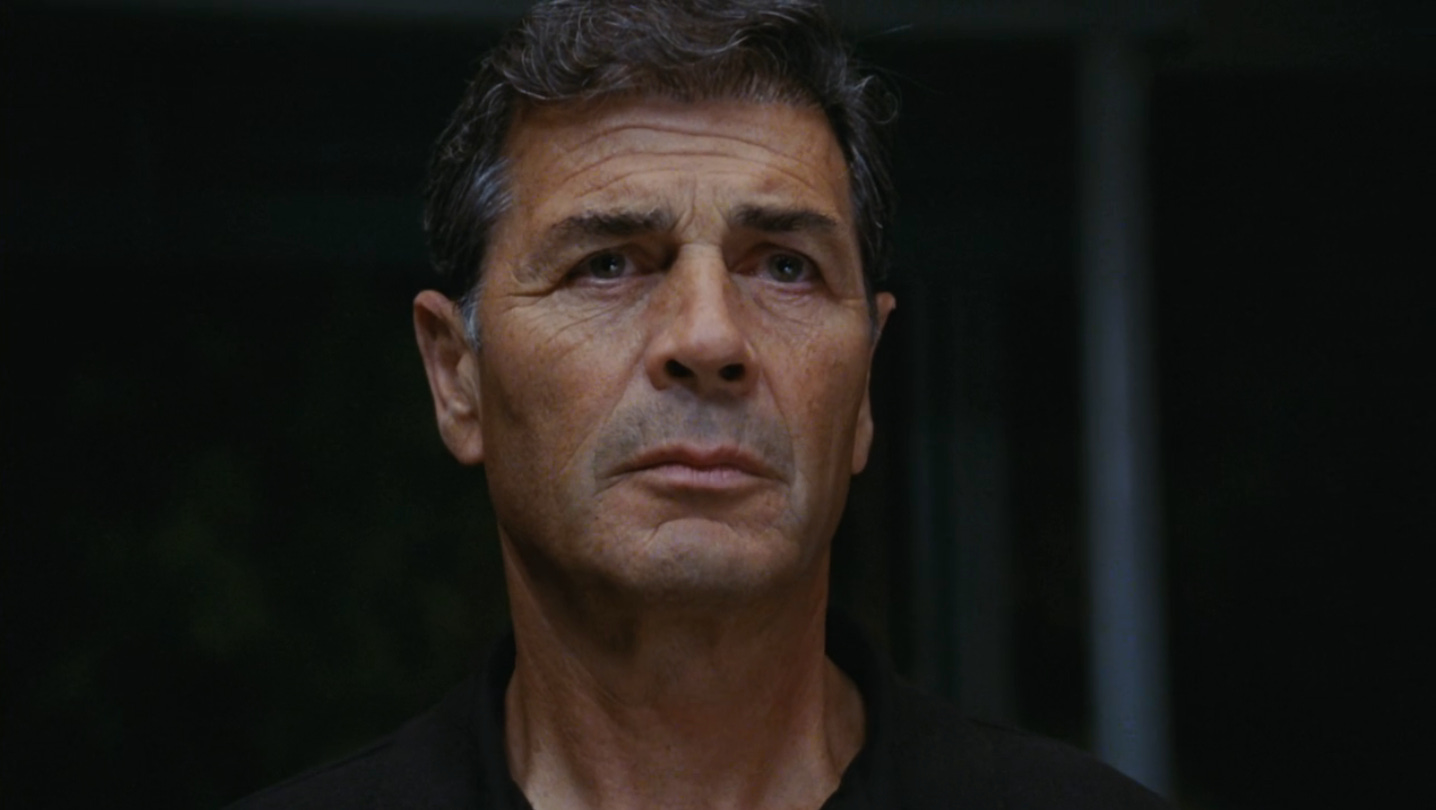
41:07: Forster was nominated for the Best Supporting Actor Oscar for his performance as Max Cherry. My contention is that it was this moment here—where he falls in love with Jackie as he watches her walk out of jail—that he earned the nomination. He somehow delivers a four-page monologue by barely moving his expression a centimeter. It’s incredible. Let’s watch him do it:
Art.
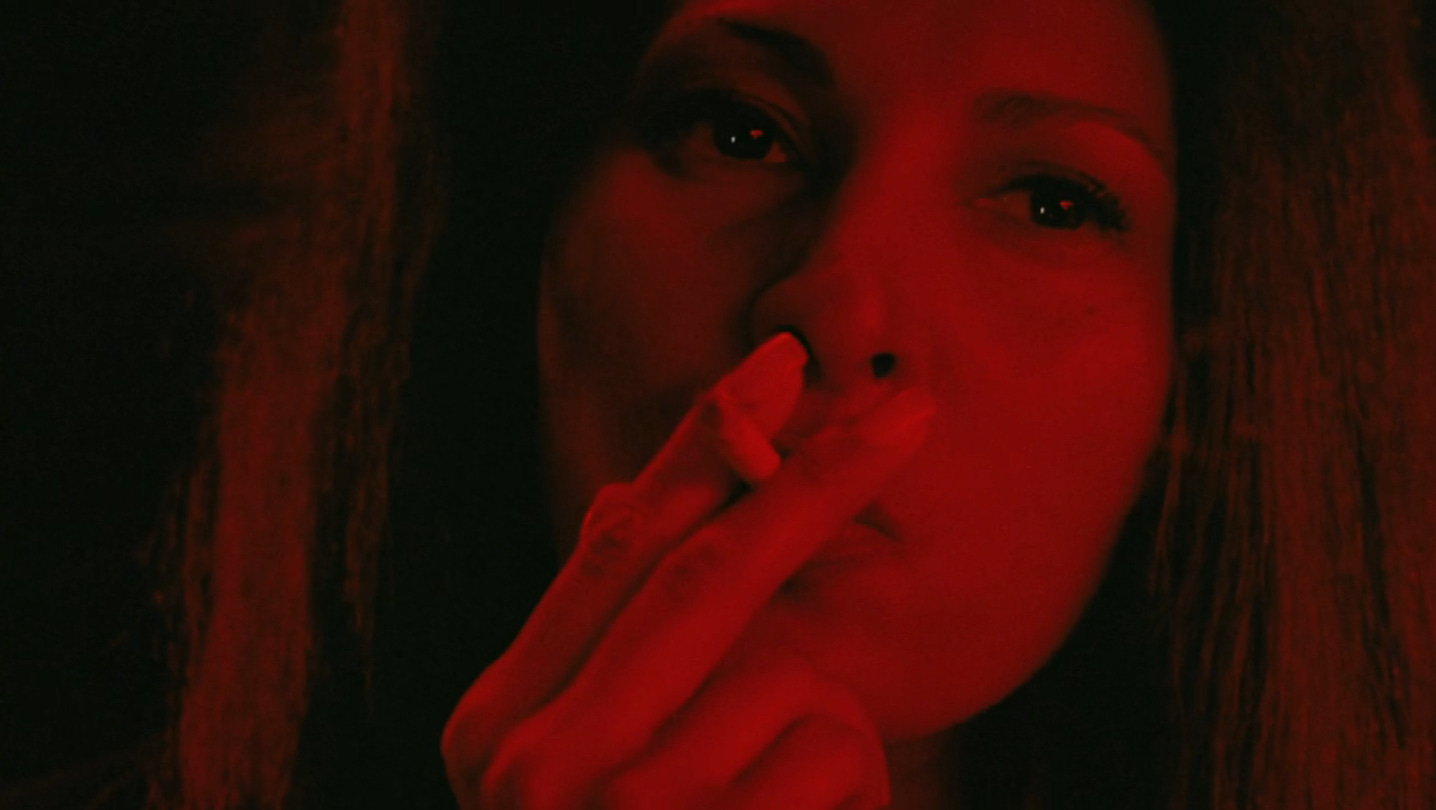
44:07: Whenever Larami and I go out on a date, we almost always end up at a stoplight somewhere along the way. And if I’m lucky, we’re the third or so car in the lineup. Because if we’re the third or fourth car in the lineup, that means a soft red light will be shining from the brake lights of the car in front of us onto Larami’s face. And a soft red light on a beautiful woman’s face… that’s as good as it gets, my friends. I’ve fallen in love with that woman 150 different times at 150 different stoplights.
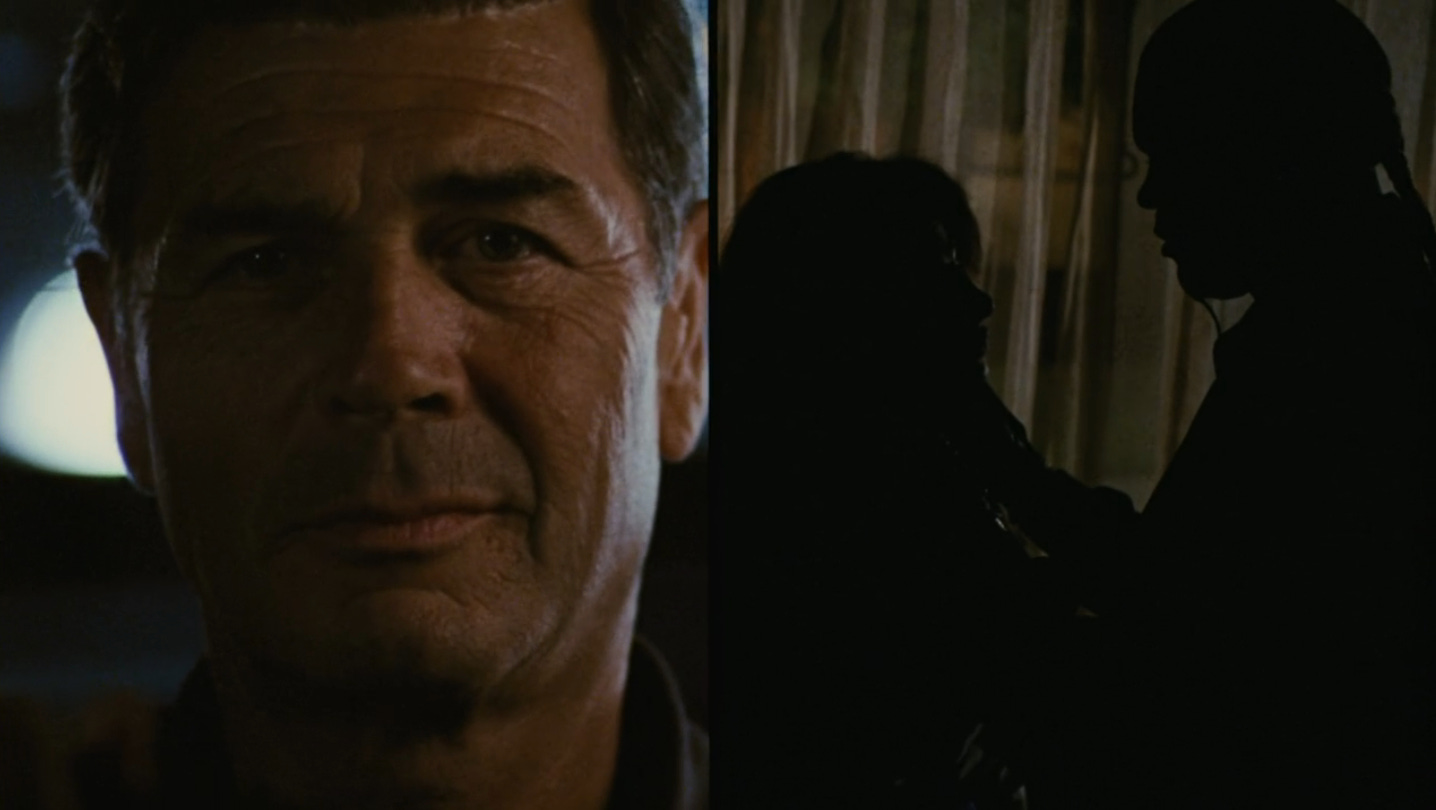
50:35: This splitscreen here is my favorite moment in the movie. On one side, we have Max making his drive back to his office just sort of joyfully vibrating from his encounter with Jackie, and on the other side we have Ordell attempting to intimidate Jackie in her home by slowly placing his hands around her throat. The five things I love most about this bit:
I love that when you watch it play out the first time, you think it’s just one of those HEY, LOOK HOW COOL OF A DIRECTOR I AM tricks that auteurs implore occasionally. But then you get the reveal that what’s really going on is Tarantino is showing you how Jackie ended up in possession of an unexpected gun and it’s just like, “Man. I fucking LOVE this movie,” you know what I mean?
I love that the Jackie/Ordell stuff is all happening in the dark.
I love that when Jackie cocks the gun after Ordell puts his hands around her throat, the sound of the gun’s hammer being pulled back is what activates the shot to transition out of the splitscreen device and back into the full screen view.
I love Ordell asking, “Is that what I think it is?” then Jackie asking back, “What do you think it is?” then Ordell saying, “I think it’s a gun pressed up against my dick,” then Jackie saying, “Well, you thought right. Now, take your hands from around my throat.”
And I love that for the first (and only) time in the whole movie, Grier allows her voice to sound threatening. She briefly dips back into her Foxy Brown tone and it’s like a lightning bolt hit you in the forehead.
It’s just all so perfectly played.
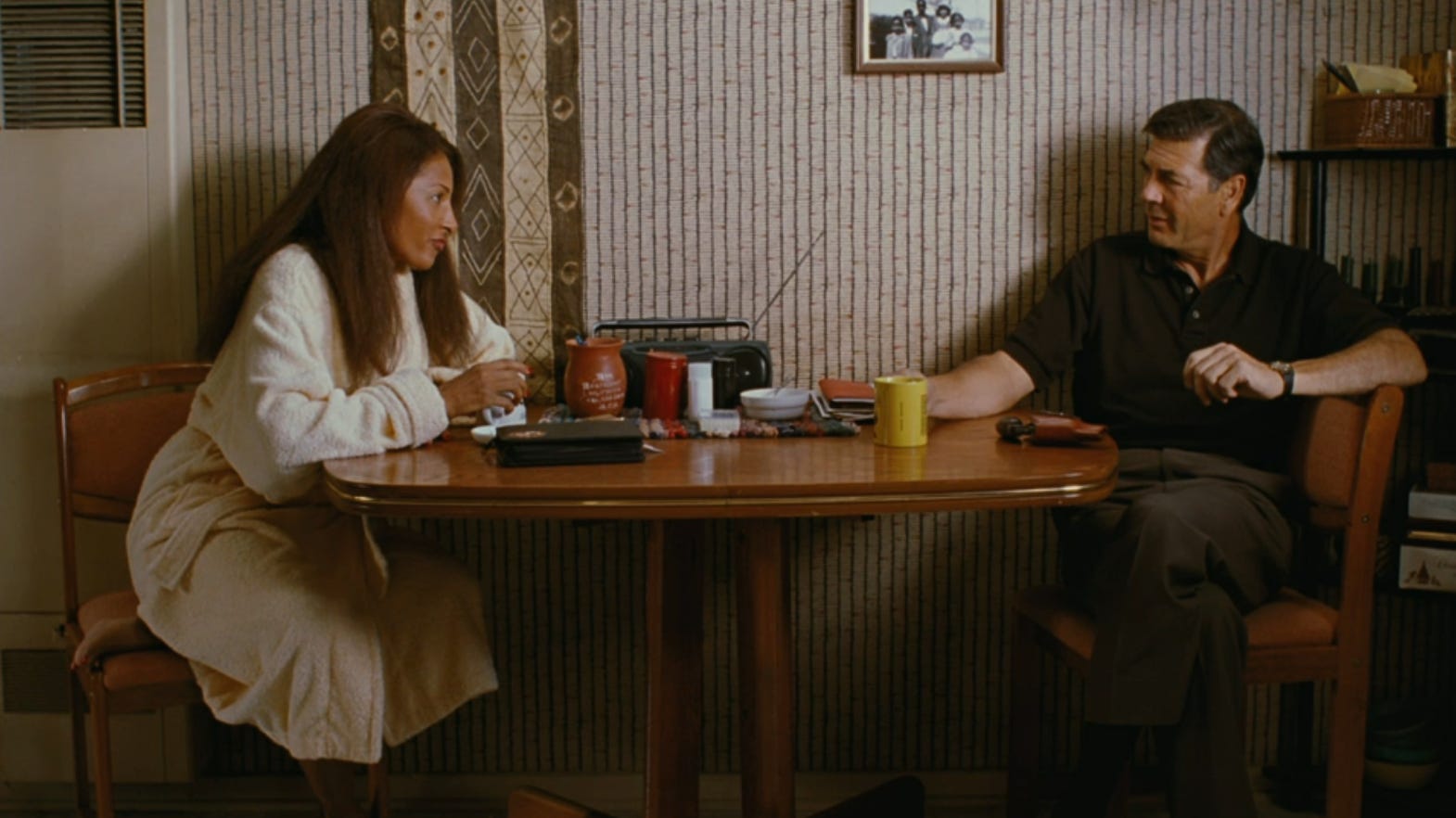
57:46: This scene here where Max visits Jackie and she (a) catches him up on her plan to work with the ATF to set Ordell up, and (b) talks with Max about aging… I mean… come on. How the fuck was Grier NOT nominated for an Oscar that year? Helen Hunt and Kate Winslet of course had to be in there (for As Good as It Gets and Titanic, respectively). Their spots are safe. But you’re telling me Pam Grier wasn’t at least as good in this as Helena Bonham Carter in The Wings of the Dove, or Julie Christie in Afterglow, or Dame Judi Dench in Mrs. Brown??????? Get Dame Jude Dench the fuck outta here. They got the wrong Brown!
57:47: P.S. A small thing that’s somewhat related to the above timestamp: The woman who served as the casting director for Jackie Brown… her name… if you can even believe this… is Jaki Brown.
57:48: P.P.S. The list of movies Jaki Brown did casting for is incredible. She did Boyz n the Hood(!), Stand and Deliver(!), Friday(!), I’m Gonna Git You Sucka(!), Cool Runnings(!), Higher Learning(!), Billy Madison(!), Waiting to Exhale(!), and a bunch more. She put Tupac in Juice! She discovered Chris Tucker! She helped broker the Filipino-Mexican alliance by casting Lou Diamond Phillips as a cholo! This woman should have a 20-foot-tall statue in her hometown.
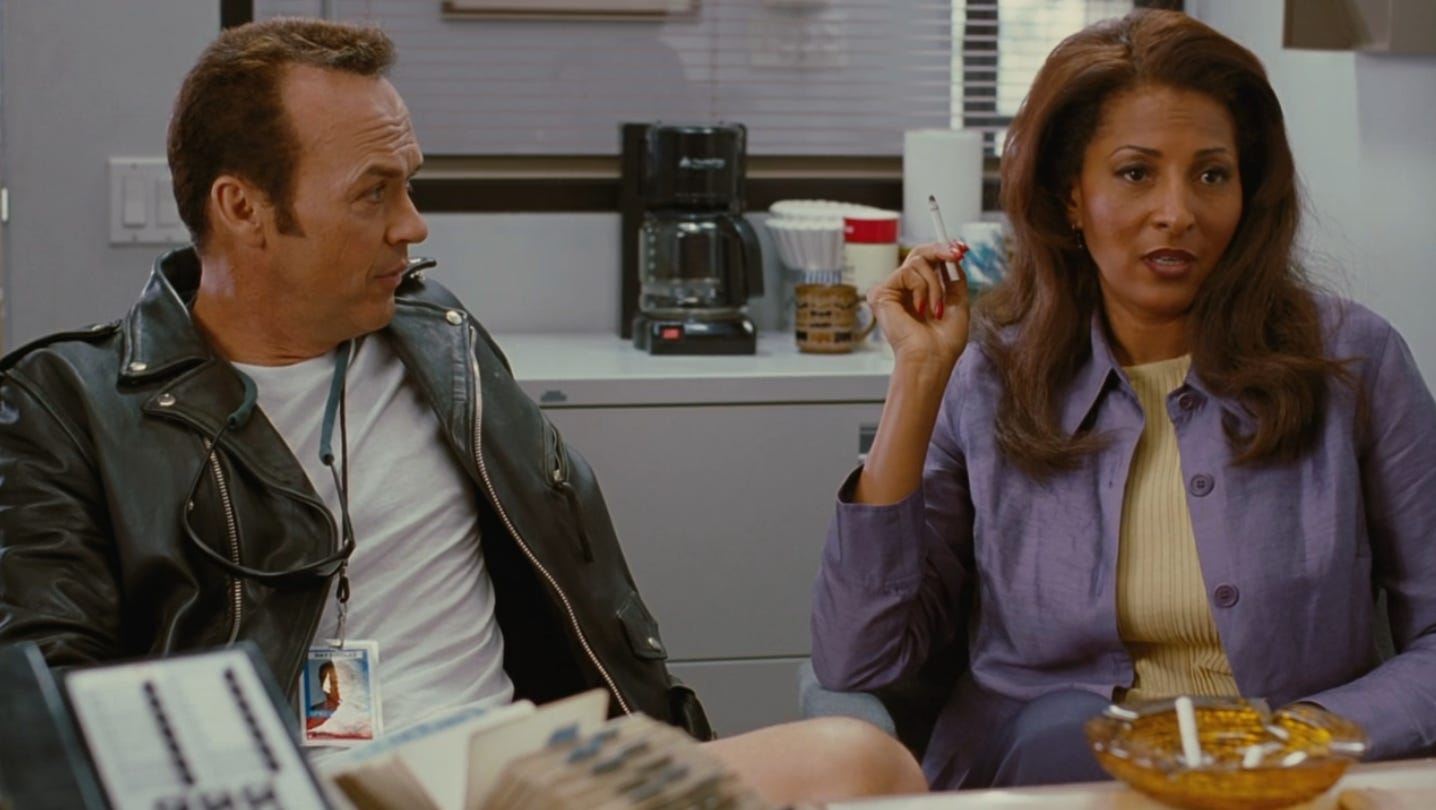
1:02:34: A really great running bit in Jackie Brown is how many men think they’re coming to Jackie’s rescue, a thing she not only knows but also surreptitiously uses against them without them realizing it. That’s why Pam Grier was perfect for this role. She’s so good at knowing precisely how much I’M IN OVER MY HEAD energy to project out of her eyeballs.
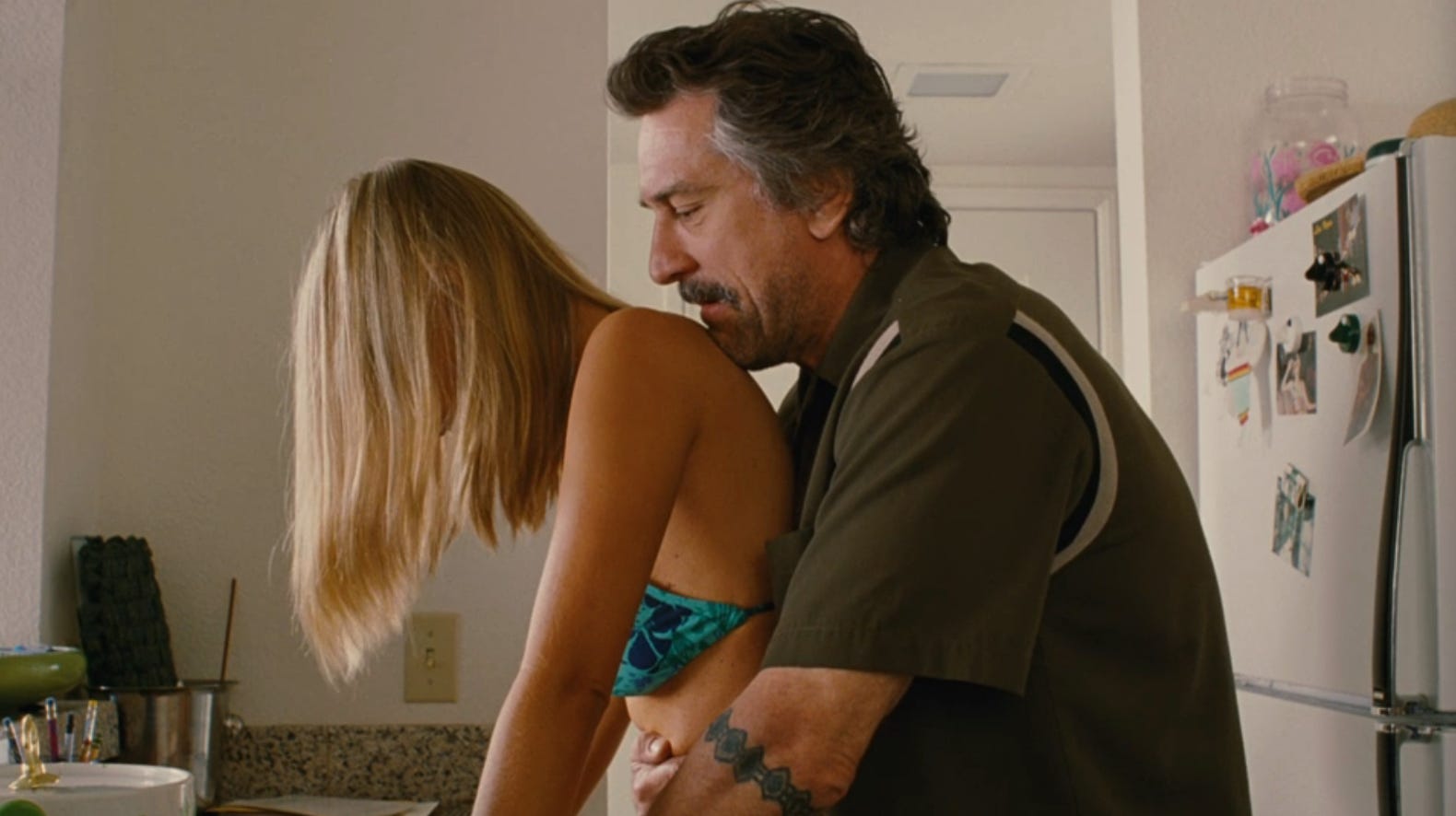
1:08:15: This is easily the least enjoyable that sex has ever looked in any of the movies we’ve covered thus far at GOOD MOVIE, which is crazy because we did Gone Girl, and that movie has a sex scene in it that ends with a guy getting his throat slit. Melanie and Louis look miserable, lol.
1:08:16: P.S. I just went back through the GOOD MOVIE archive right now. Of the more than 50 movies we’ve covered so far, only eight of them have featured a sex scene. We gotta up the Smut Factor here at GOOD MOVIE. We gotta draw in that X-rated audience. We should do an erotic theme month this fall. Sliver! Eyes Wide Shut! Basic Instinct! Fifty Shades of Grey! Get ready for SEXTEMBER, BABY!
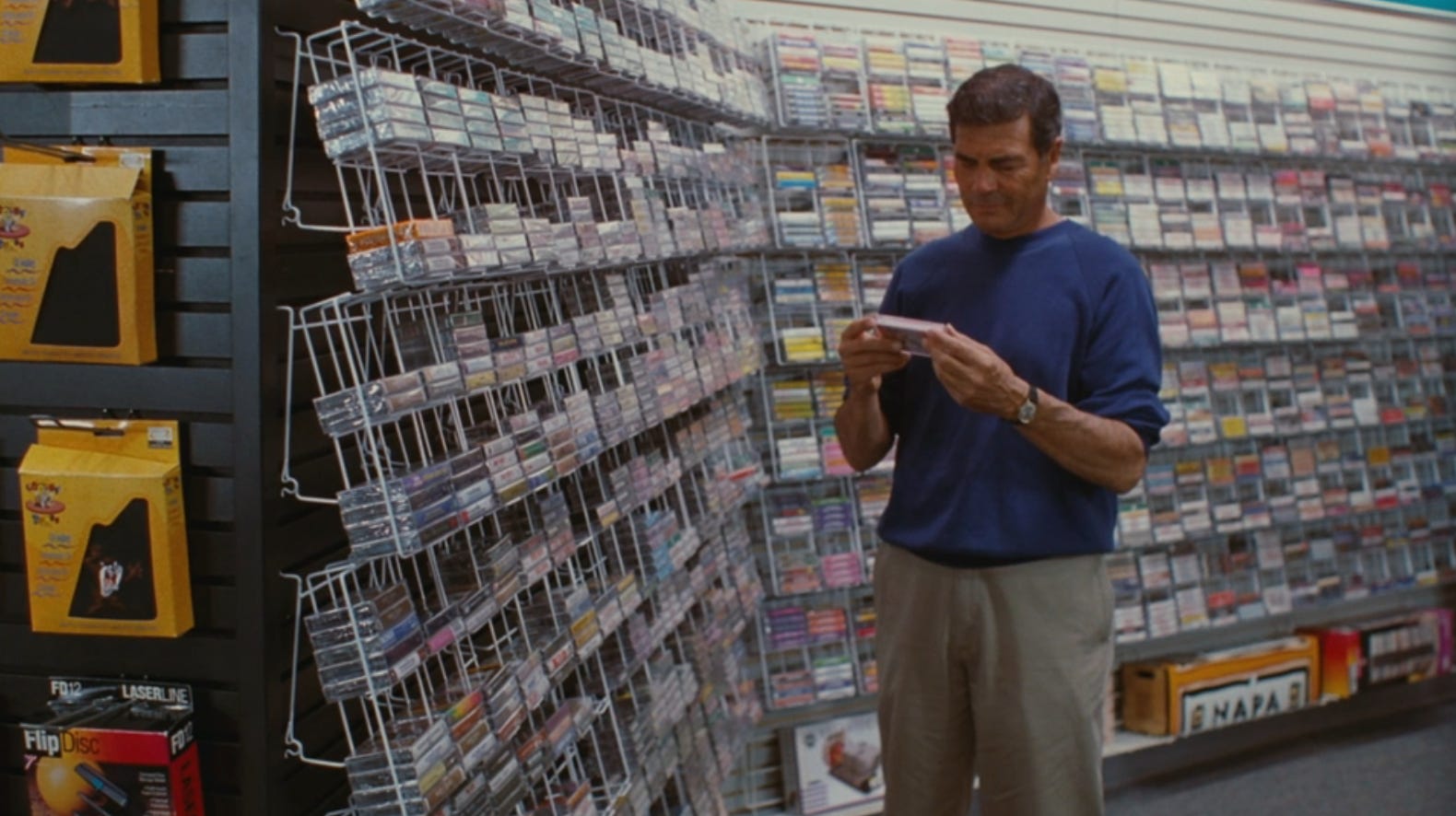
1:09:01: When Max was visiting Jackie earlier, she played a song by The Delfonics for him. Now he’s at the record store buying a Delfonics tape to listen to in his car. I did the exact same thing after I went to Larami’s dorm for the first time in college. She had an Mos Def poster up on her wall, and I had no idea who he was so she told me all about him, as well as several other musicians in his orbit. The very next day I was at the record store, and then three days after that I was wandering around campus yelling at people about how Erykah Badu was the greatest musician on the planet like I was trying to convert people on a street corner before the second coming of Christ or whatever.
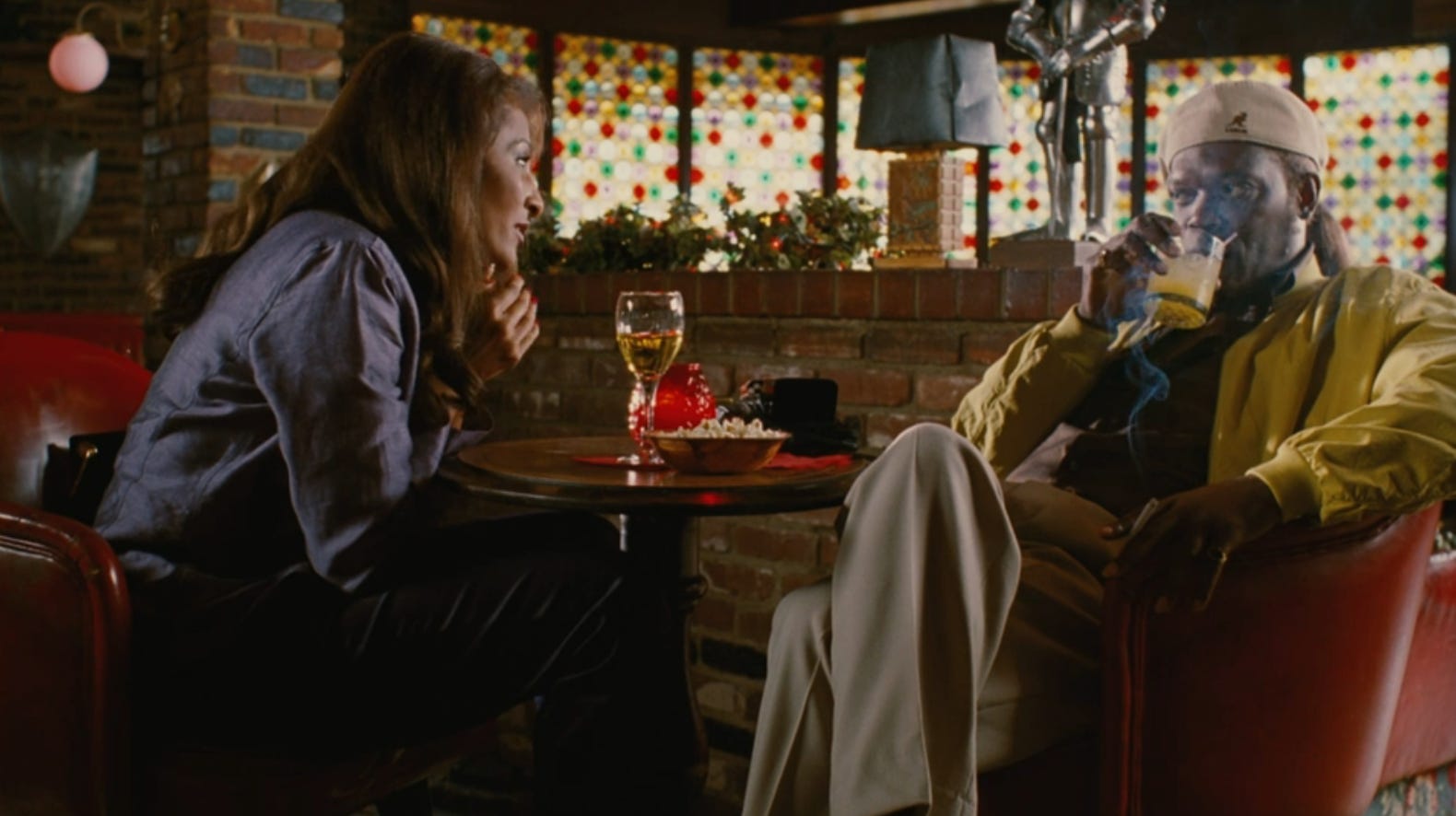
1:16:54: Sam Jackson had worn Kangol hats before Jackie Brown, but Jackie Brown marked the moment it became his signature accessory. And I’ll tell you what: I’m so happy he went with that and not the goofy long goatee thing. And since we’re talking about Kangols right now…
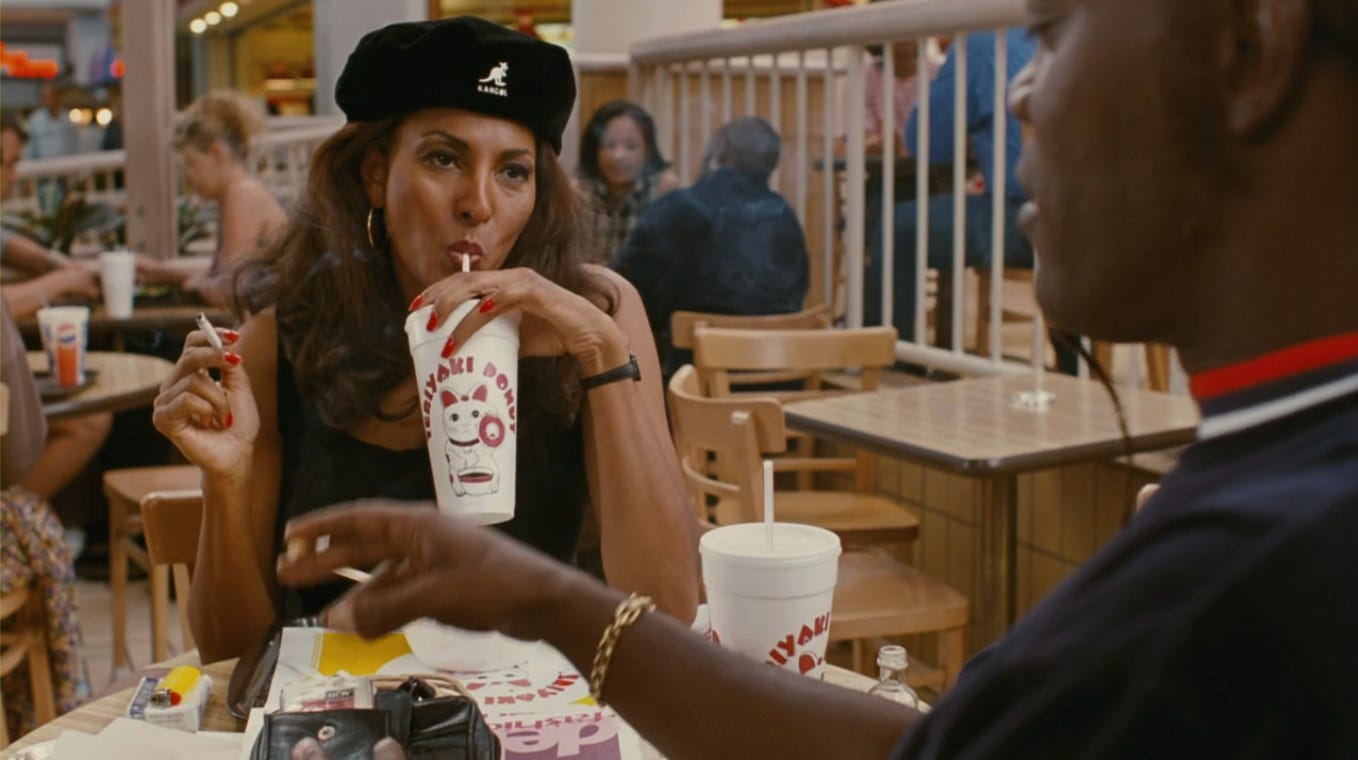
1:21:49: This is nothing, but I’m gonna pretend it’s something: The first time we see Ordell wearing a black Kangol, it’s when he goes to talk with Beaumont, who Ordell ends up leading to his death later. The first time we see Jackie wearing a black Kangol, it’s when she goes to talk with Ordell, who Jackie ends up leading to his death. Tarantino has the black Kangol show up in this movie the same way Martin Scorsese always made sure to have an X visible somewhere on the screen in The Departed whenever someone was about to die.
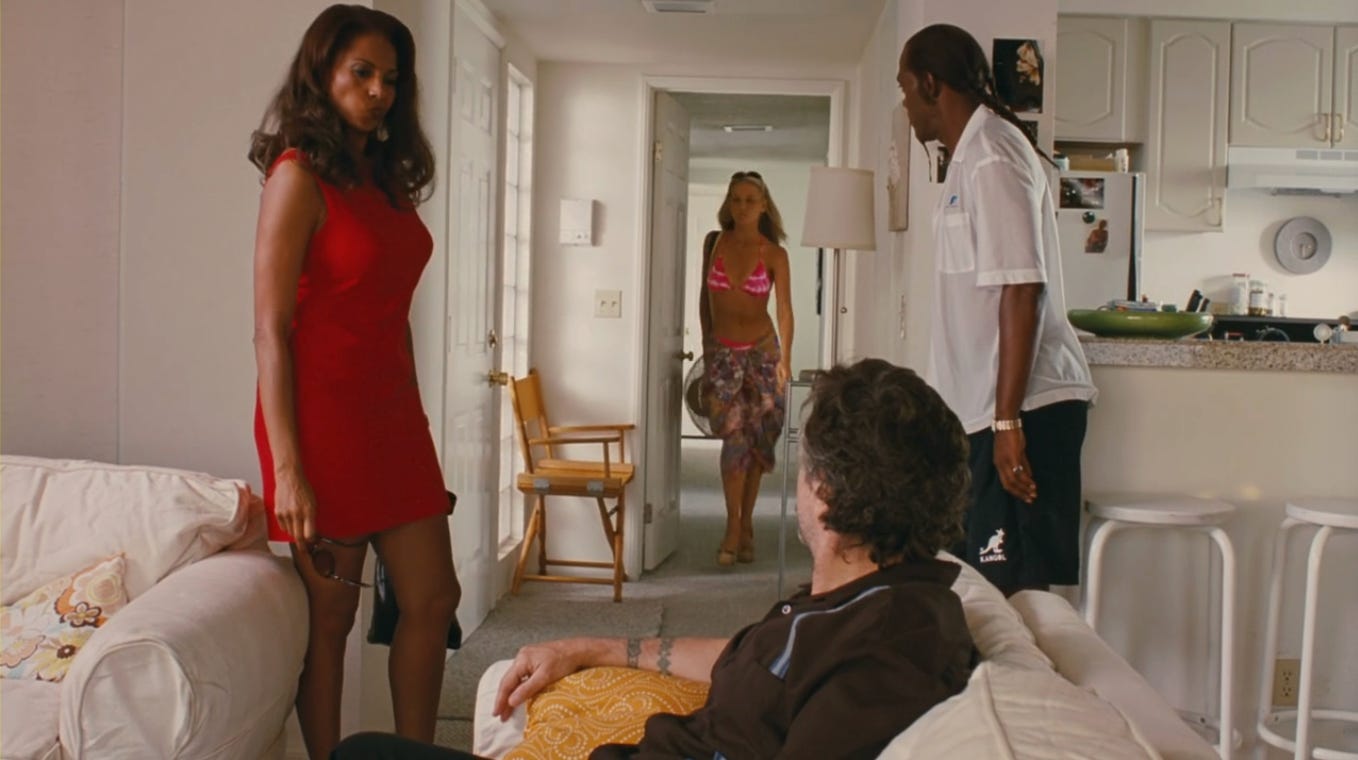
1:31:49: Three things about this scene when Jackie visits Ordell at Melanie’s apartment:
This is the only scene in the entire movie that features Jackie, Ordell, Louis, and Melanie onscreen at the same time. In less than an hour of movie time, 75 percent of them will be dead.
This might seem like a rare scene where Ordell isn’t wearing a Kangol, but take a look at his shorts: HE’S GOT FUCKING KANGOL SHORTS! I didn’t even know they made those. 😂😂😂😂
This is Jackie’s second coolest outfit, losing out to the all black outfit she just had on at the mall and narrowly beating out the final outfit she wears in the movie. (I’ll screenshot it when we get there.) To steal a phrase from my children, she was, as it were, getting them ‘fits off.
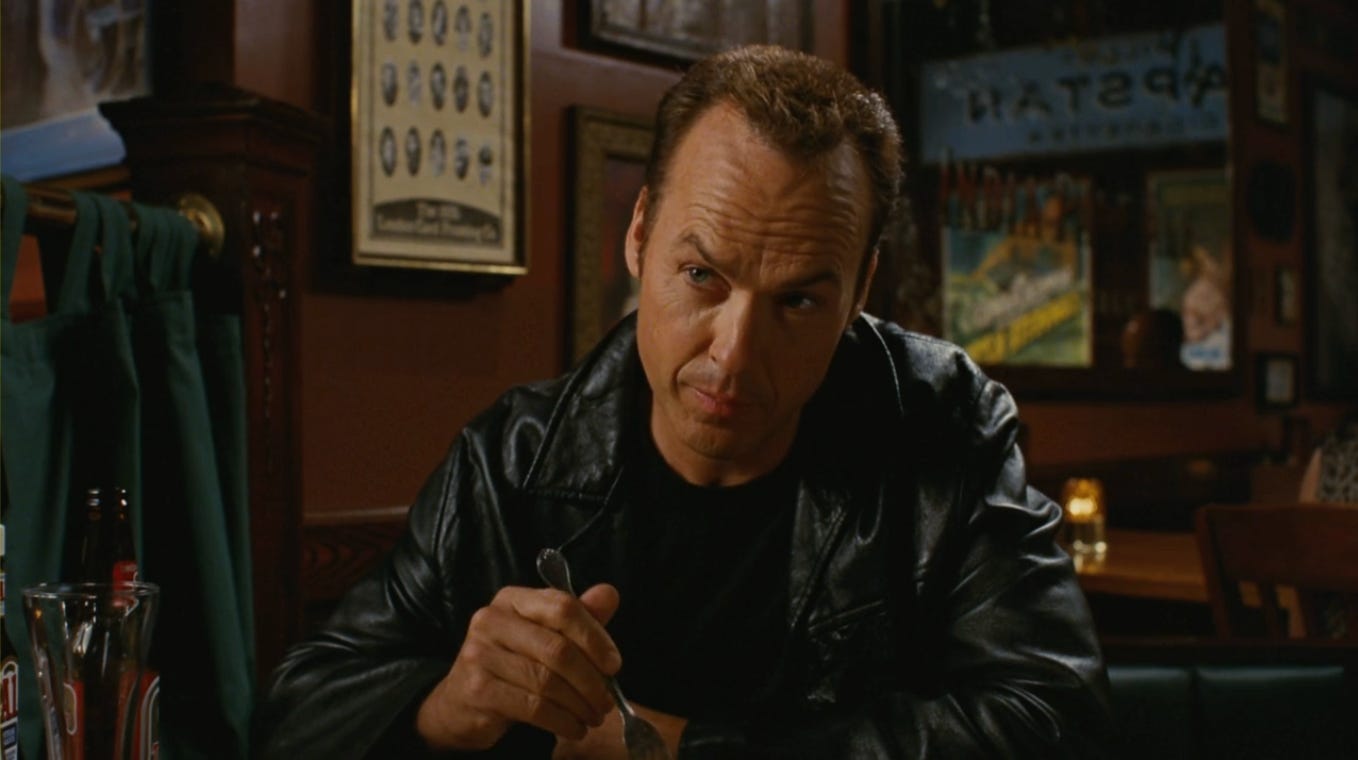
1:36:25: Jackie’s meeting with Ray to get him up to speed on the Ordell plan. There are a couple instances where Ray, who’s eating a steak, clinks his teeth against his fork as he pulls pieces of meat off it. Are you a FORK TOUCHES YOUR TEETH WHILE YOU EAT person? I absolutely am not. I hate it a ton. After I get my Face/Off guns, I’m gonna make sure to take them with me to restaurants that way if my fork ever touches my teeth I can just blow my brains out right then and there.
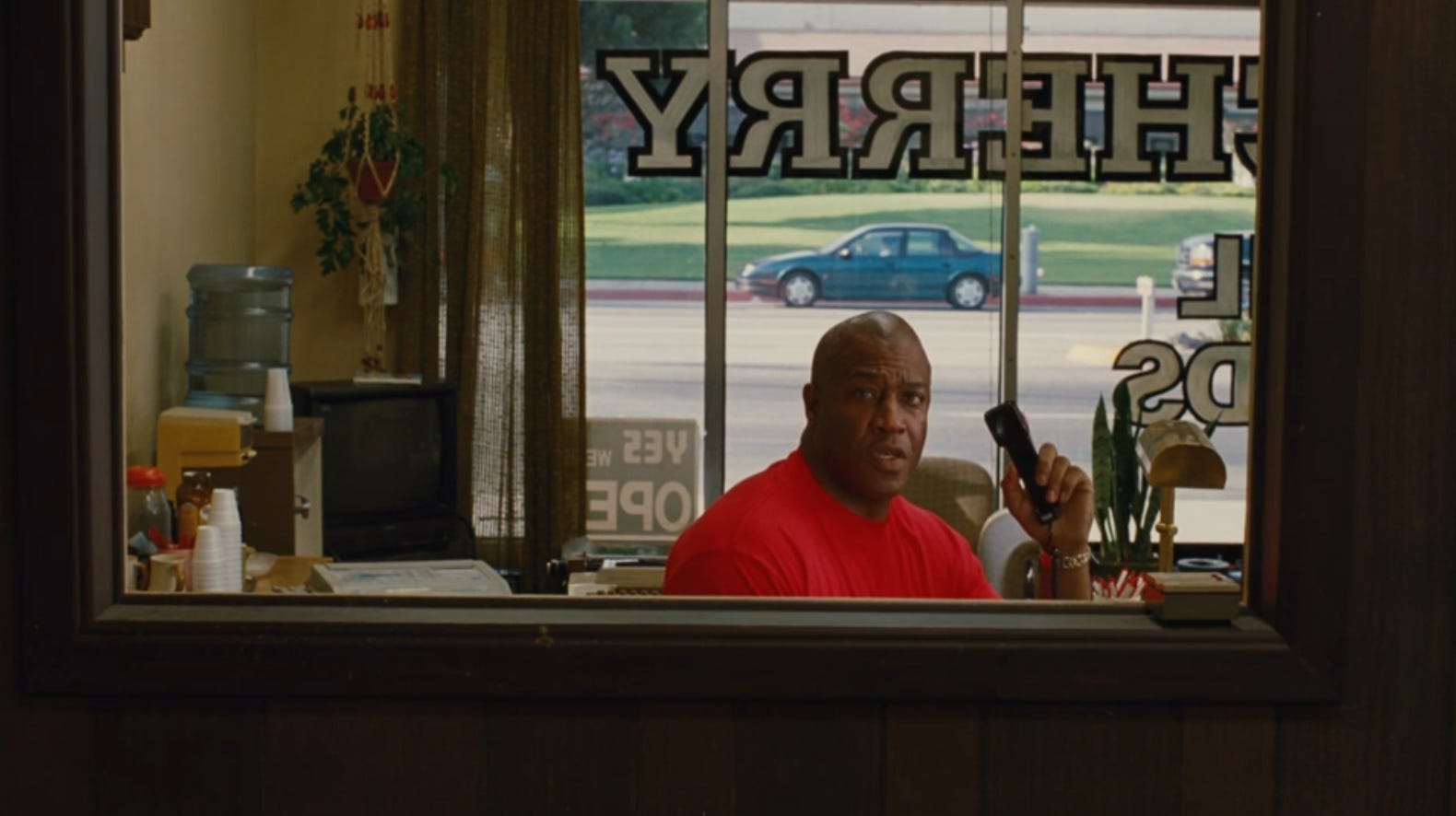
1:41:30: Ayyyyyyyyyye. Deebo is here. (He works in Max’s office.) All we need is Ice Cube to do a quick cameo and we can have a full-on Friday reunion.
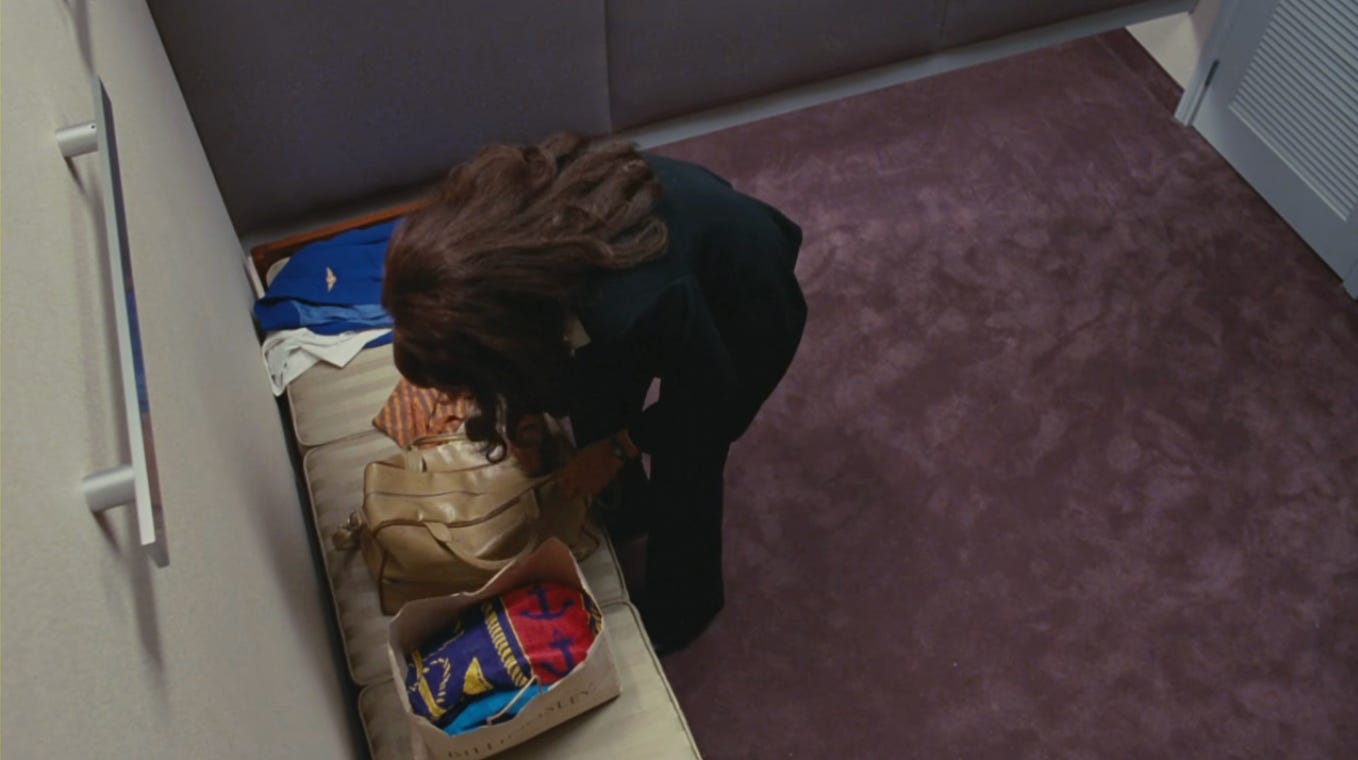
1:47:30: I’m realizing right now that we never went over the particulars of the scam that Jackie is running on Ordell and Ray. The shortest possible explanation is:
Jackie was smuggling $550,000 from Mexico into America for Ordell but told Ray that she was only smuggling $50,000 because she planned to steal the rest for herself. She handed off a dummy bag of money off to Melanie (it contained $50,000 on top of some old books) and left the bag with the remaining $500,000 in a dressing room for Max to retrieve later. Then Jackie (a) told Ray that Melanie stole the $50,000 from her, and (b) arranged to have Max tell Ordell that she had his $500,000 and wanted to give it to him, except (c) really she was walking Ordell into a shootout with Ray.
And if any of that sounds confusing or uninteresting or like not that much fun, then that’s only because I did a bad job of explaining it, because the whole scam is super clean and super interesting and super fun. It’s as tightly wound as pretty much any movie scam ever.
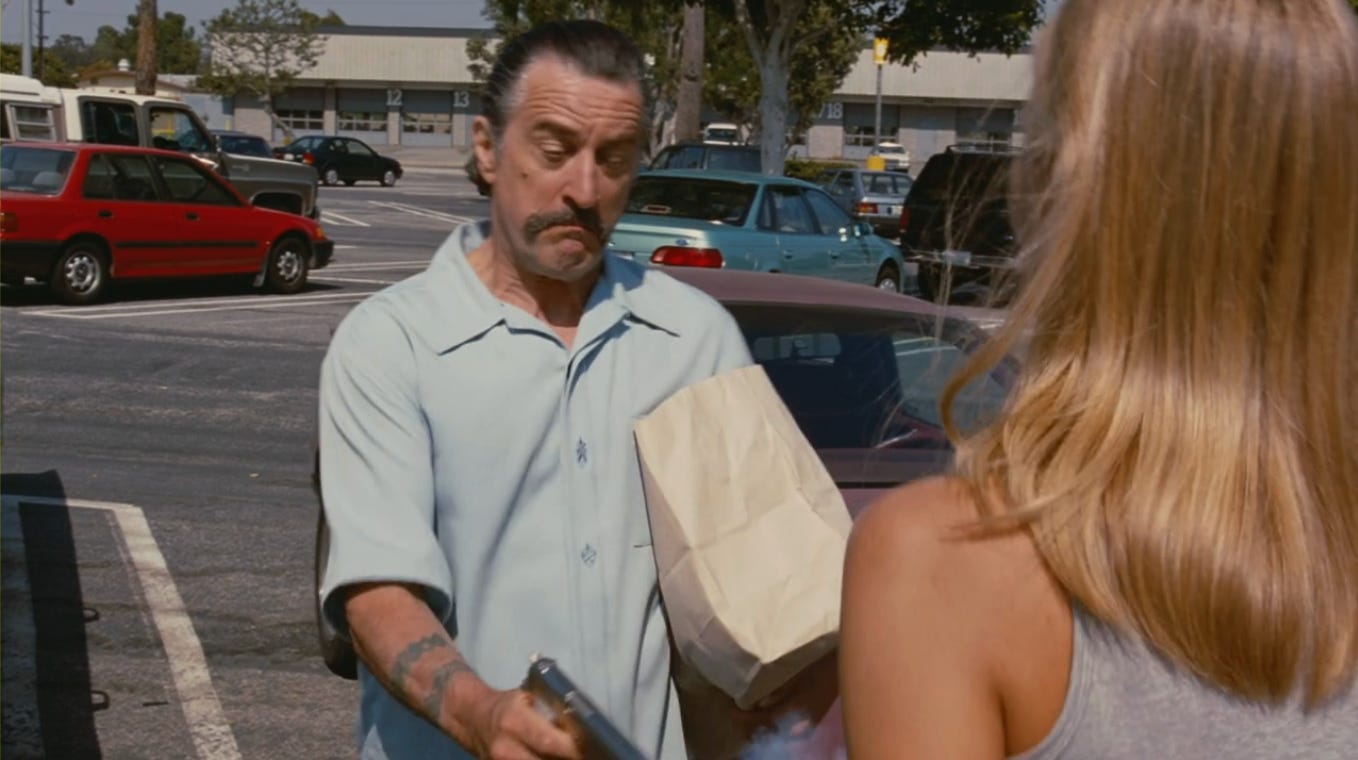
1:53:20: …Aaaaaaaaaaaaand Melanie’s dead. Louis shot her because she was giving him a hard time about not remembering where he parked the car, which… I mean… a smidge of an overreaction there. Someone starts poking fun at you for losing your car in a parking lot, there should be like, at minimum, two more steps before you shoot that person in the stomach and chest.
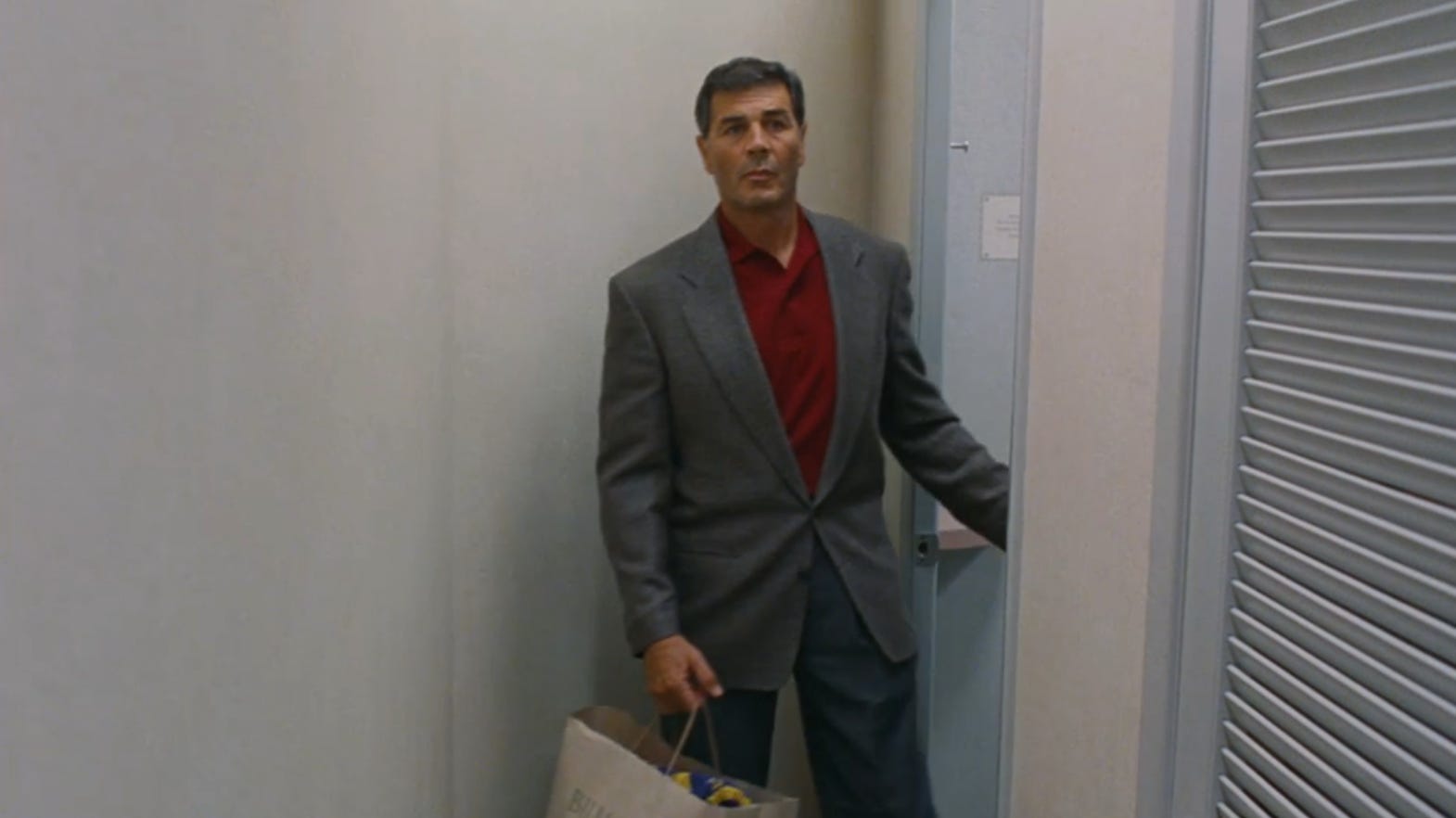
1:58:05: …Aaaaaaaaaaaaand Max has the money. The needle drop that happens when he steps out of the dressing room with it: “Aragon” by Roy Ayers, which first played in Pam Grier’s Coffy nearly a quarter-century earlier. God, I love this movie.
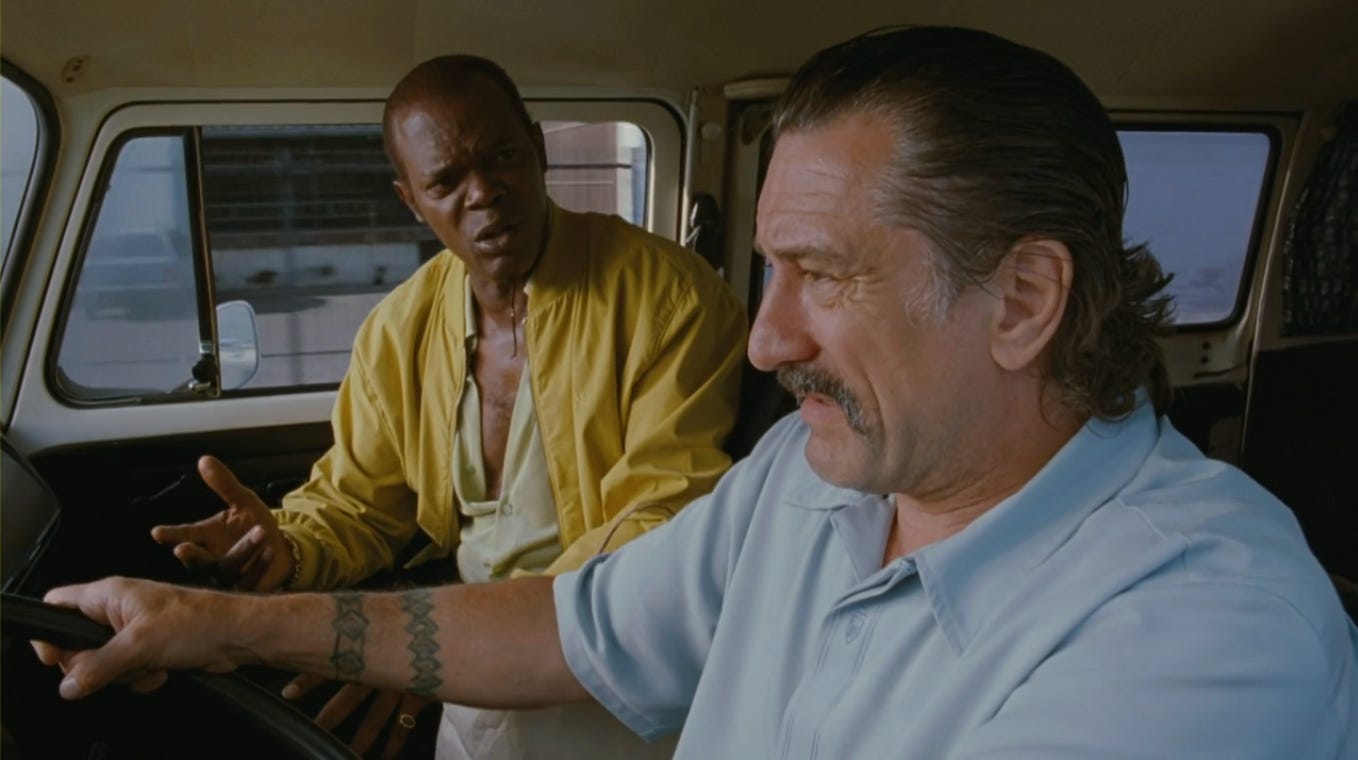
2:00:30: The conversation Ordell and Louis have after Louis tells Ordell that he shot Melanie is so great. Jackson and De Niro have such a good feel for how to handle the rhythm of Tarantino’s dialogue. It’s like two guys running a pick and roll that they’ve done 100,000 times already. It all just feels so totally authentic, like real humans talking to each other.
ORDELL: You shot Melanie?
LOUIS: Twice. In the parking lot.
ORDELL: You couldn’t talk to her?
LOUIS: Well… I… How can you talk to her? You know how she is.
ORDELL: You couldn’t just hit her?
LOUIS: Maybe. But at that… at that ti— at that moment… I don’t know. I…
ORDELL: You shot her? Twice? Is she dead?
LOUIS: I… I… pretty much.
ORDELL: What do you mean “pretty much,” Louis? That ain’t no fucking answer. Yes or no, is she dead?
I would happily watch a two-hour movie that was just these two guys talking about shit while driving from L.A. to Palm Springs.
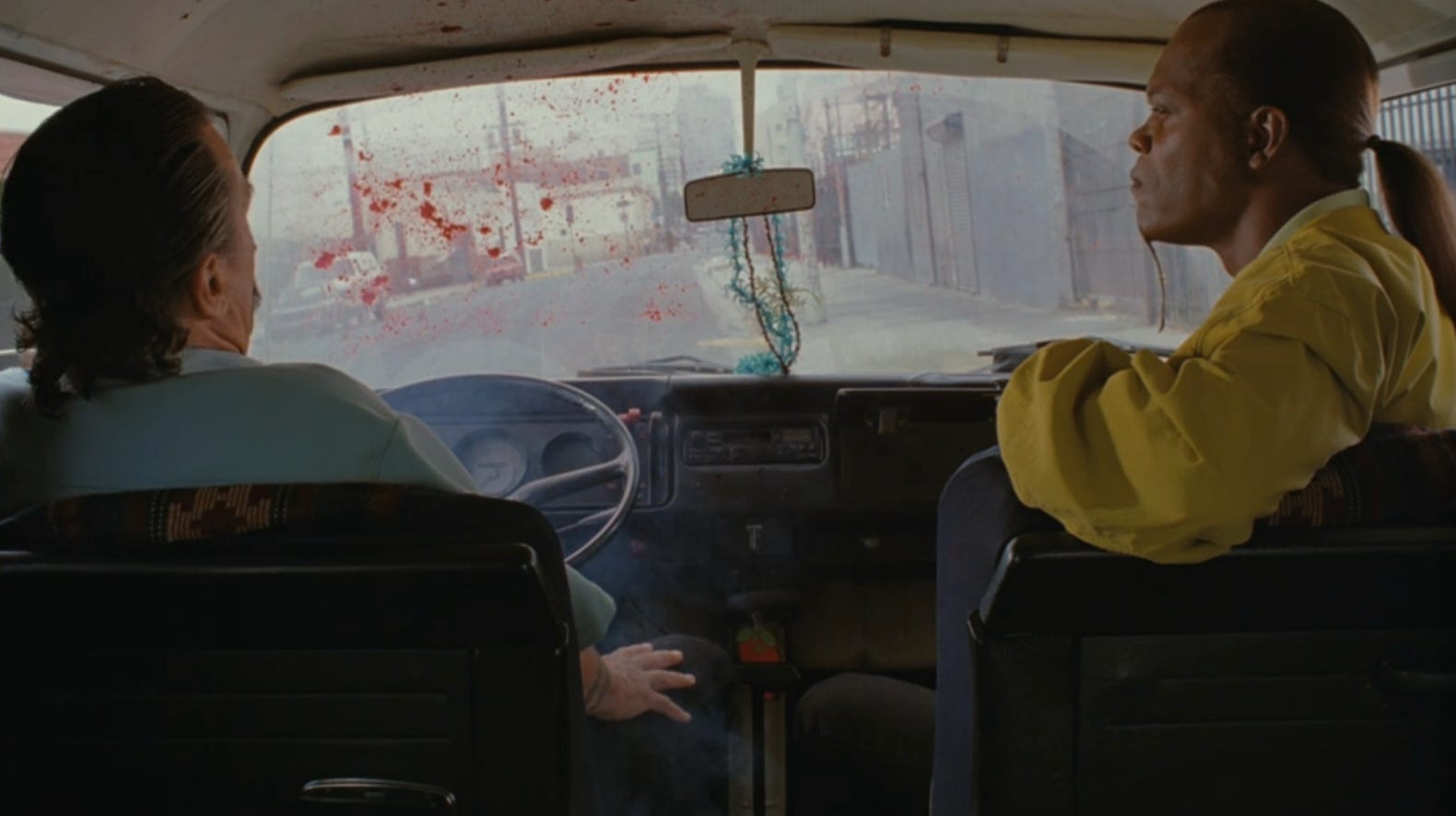
2:05:14: …Aaaaaaaaaaaaand Louis is dead. Louis got offended that Ordell asked if he was scamming him and so he started mouthing off, which led to Ordell shooting him. And I just wanna say: As bad as it is to shoot someone, I’m with Ordell here. Not only did he give Louis plenty of chances to shut the fuck up, but he also instantly sided with Louis re: the Melanie shooting just a few moments earlier. Like, he didn’t press Louis about it at all. Louis told Ordell that he shot Melanie, and Ordell literally shrugged his shoulders and said, “If you had to do it, then you had to do it.” Expecting Ordell to ignore Melanie’s shooting AND ALSO ignore you talking to him disrespectfully is a step too far. You can have one or the other, not both.
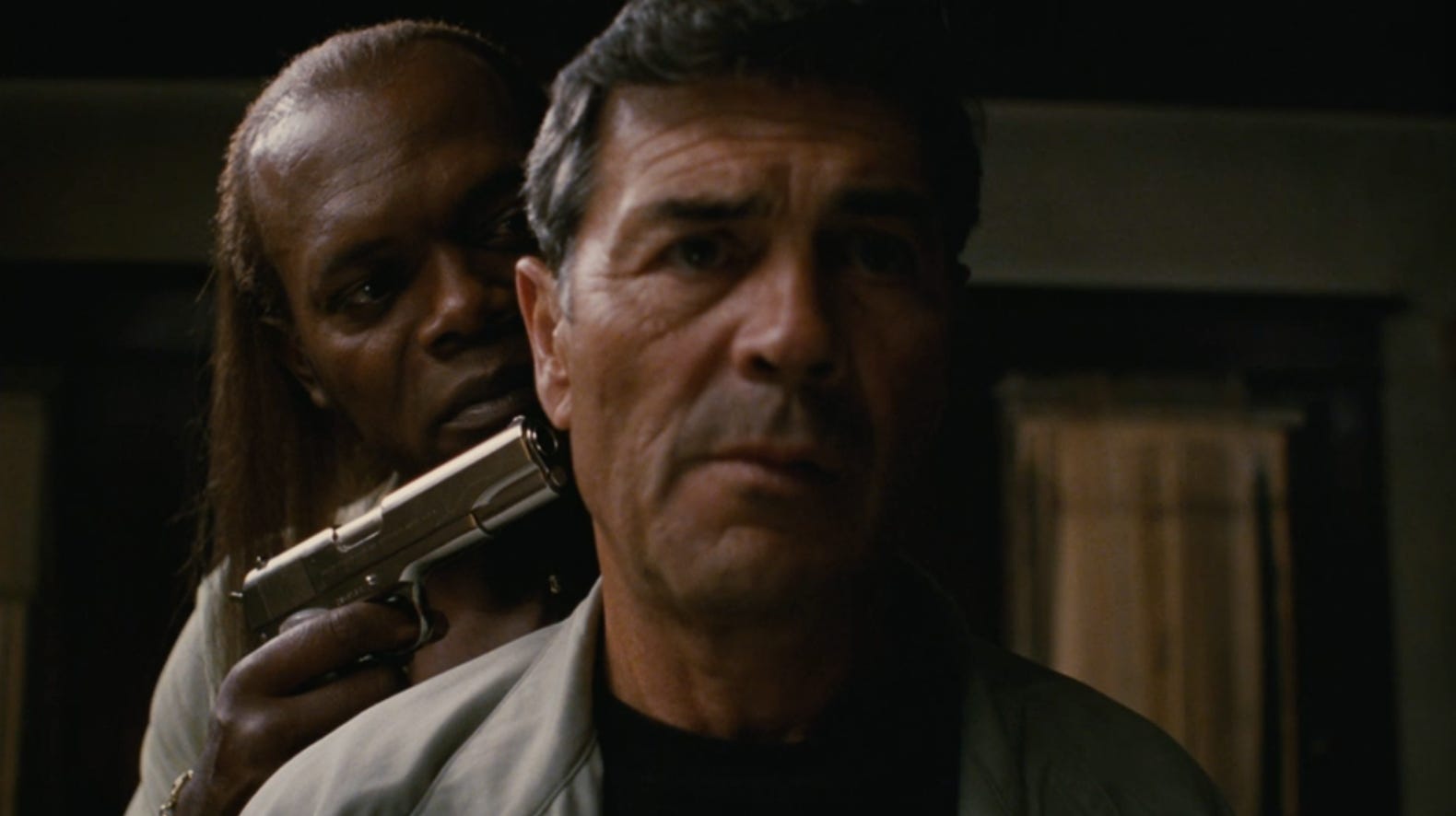
2:15:43: Okay, time for the final piece of Jackie’s plan. Poor Ordell is about to walk directly into an ambush. Rest in peace, my friend. I hope they have NBA League Pass in heaven.
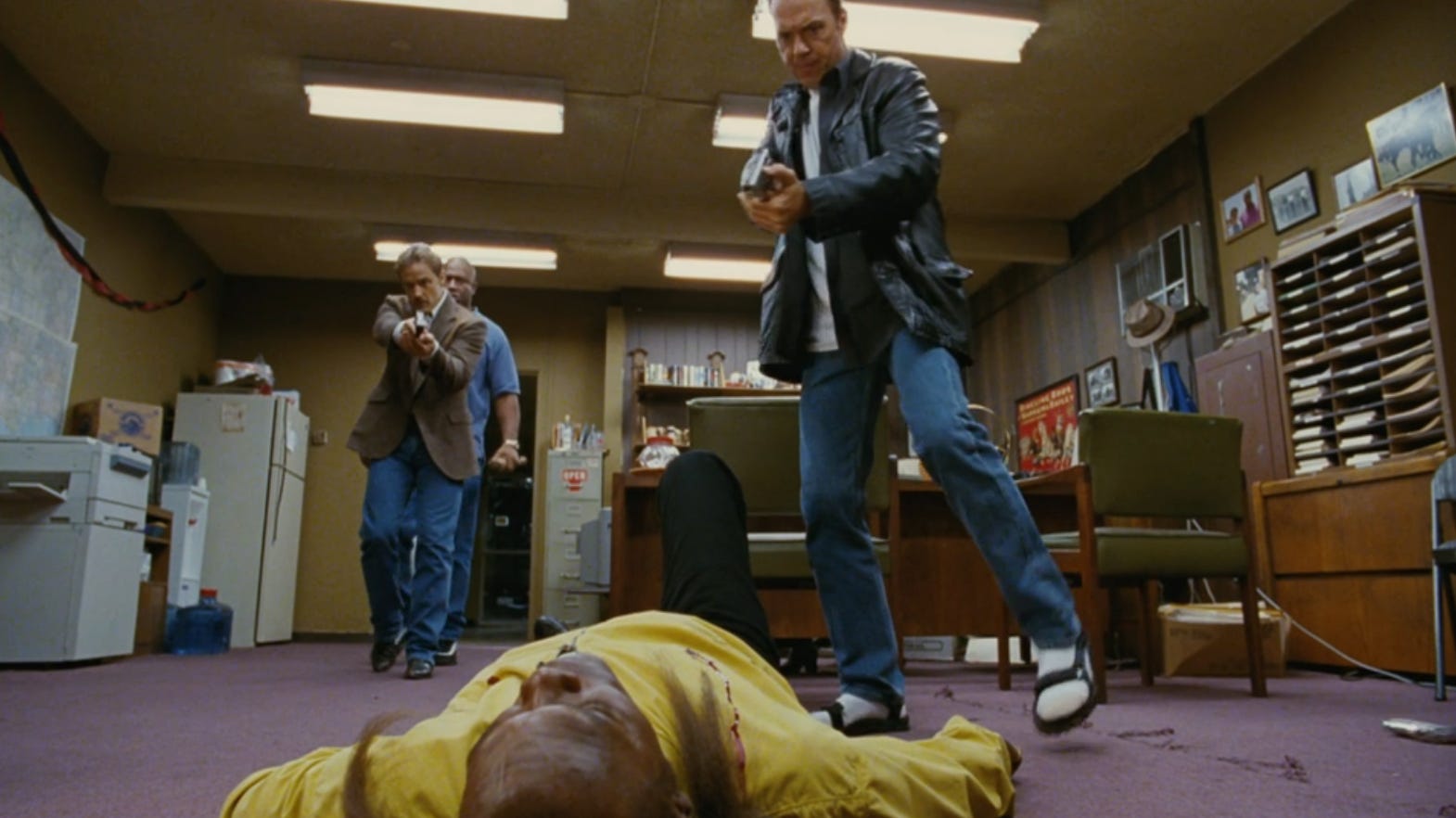
2:23:24: …Aaaaaaaaaaaaand Ordell is dead. Three things about this:
I really, really hope that my life doesn’t end by somebody shooting me, but if I do get shot to death, I fucking I all-caps PRAY that it’s not by a guy wearing strap sandals and socks. How embarrassing.
Ray has a crazy fast trigger finger here. All it takes is Jackie yelling “Ray, he’s got a gun,” and then literally one second later Ordell has three new bullet holes in him. Ray couldn’t even see the gun. (They were in the dark!) He just trusted Jackie and started shooting. That’s the behavior of a man who’d been daydreaming about shooting someone.
See Deebo in the back? He has a bat instead of a gun. If I could snap my fingers and auto-generate a nonexistent deleted scene from Jackie Brown to watch, I’d want it to be a scene where Ray and his partner talk with Deebo about him choosing to arm himself with only a baseball bat for the potential shootout. I bet that’d be a lot of fun to watch.
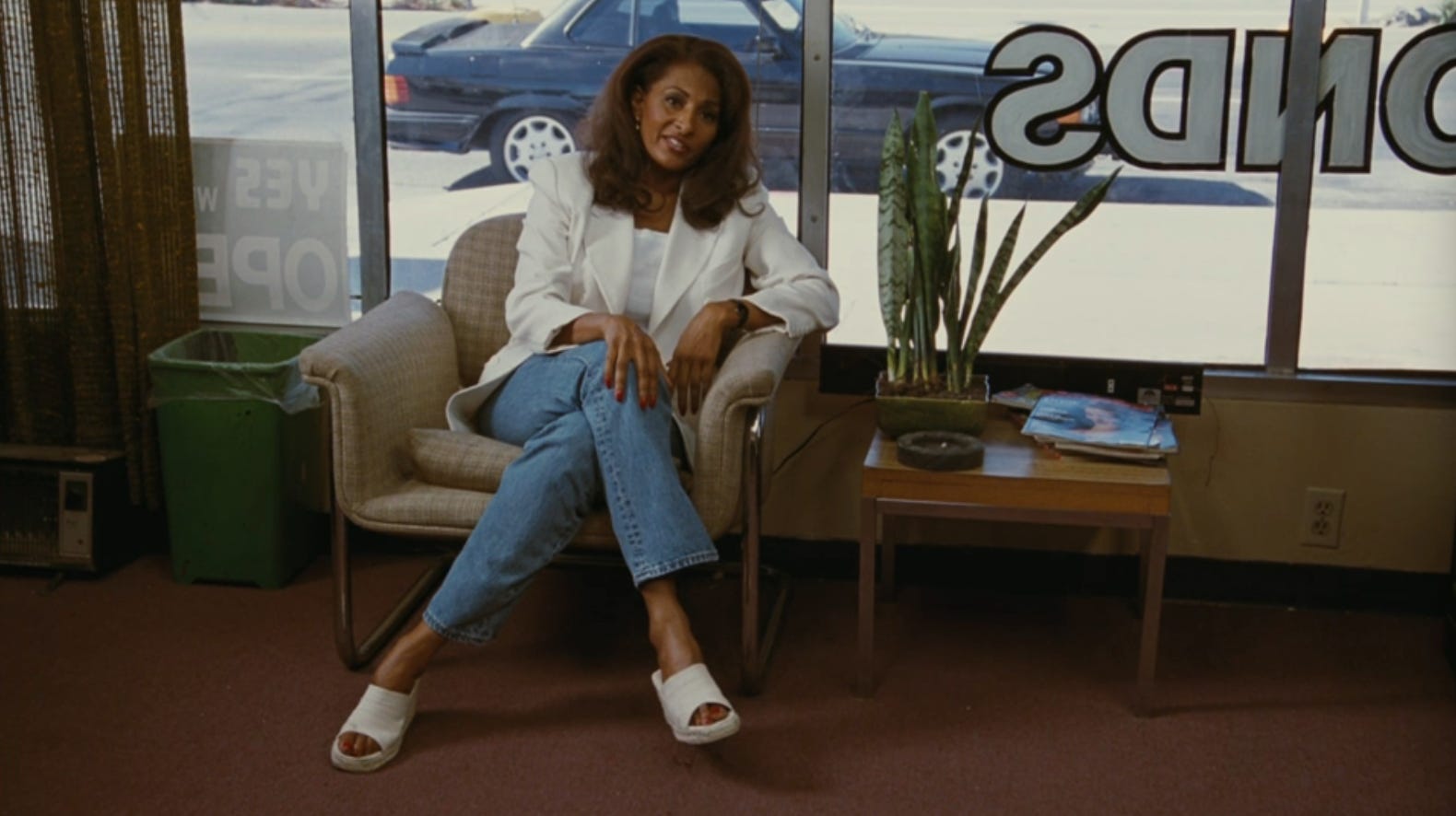
2:25:33: That last great Jackie outfit I mentioned earlier. You could’ve plucked her character out of this movie and dropped her into The Devil Wears Prada, and nobody would’ve flinched.
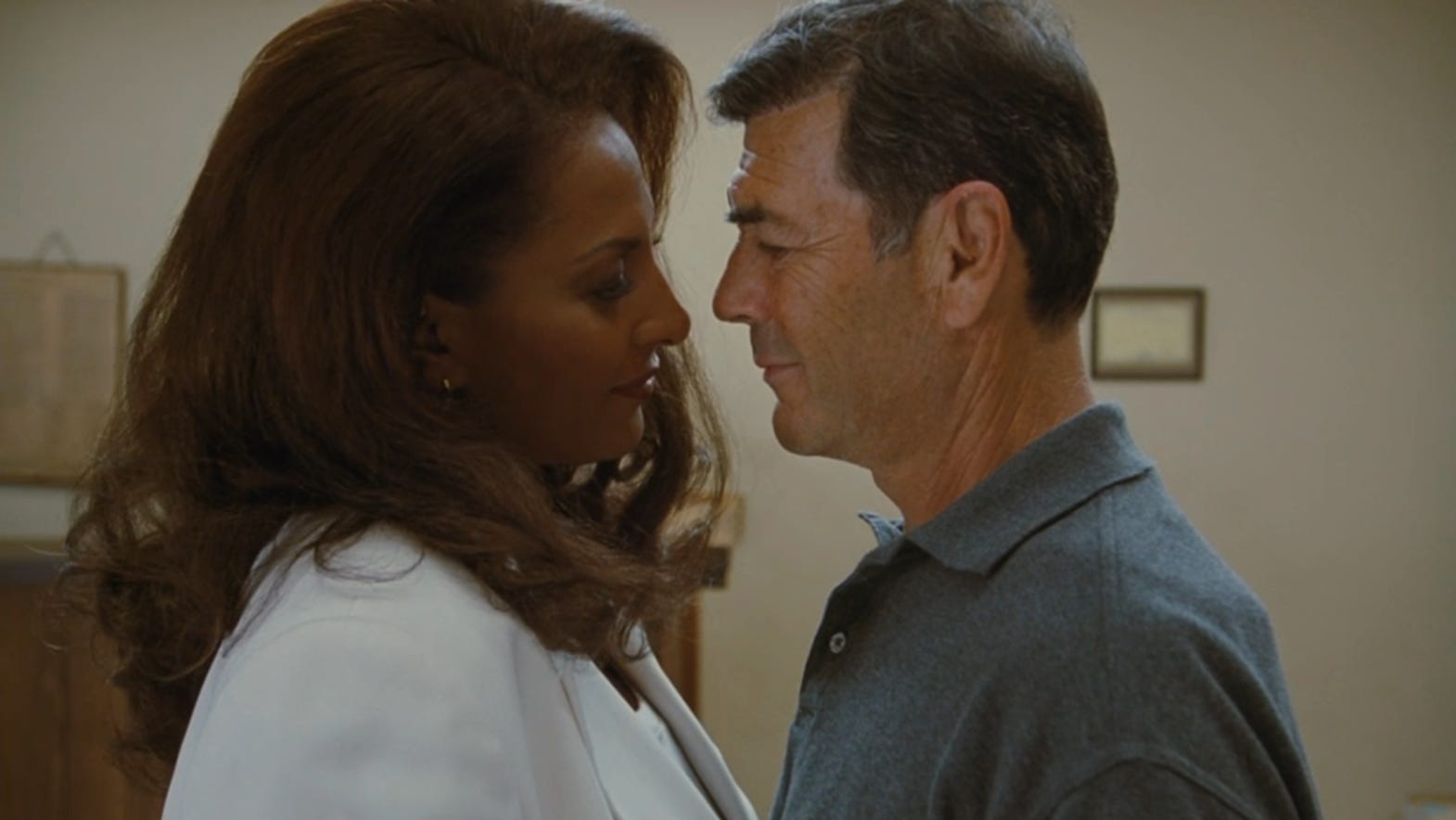
2:26:51: Here’s the ending I mentioned at the start of the essay where Jackie kisses Max after asking him if he wants to go to Spain with her. What a moment. It’s gotta be somewhere in the TOP 30 MOVIE KISSES EVER list, right?
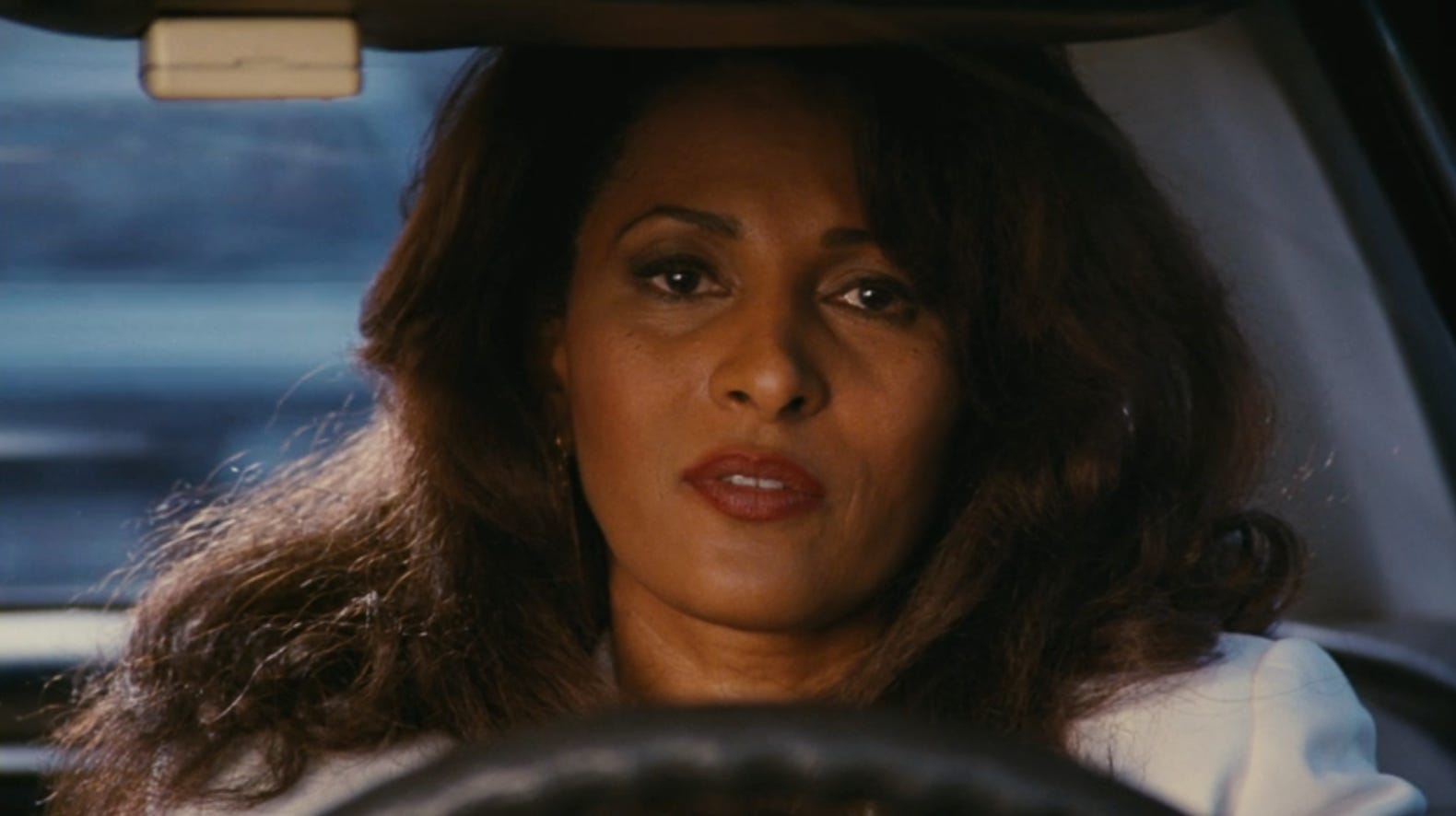
2:28:38: The movie opens with an extended shot of Pam Grier making her way through an airport in her work uniform, walking directly toward danger and destruction. It ends with another extended shot of Grier, this time in her day-off clothes, driving away from everything bad and toward freedom. I have to believe that the symmetry here was not an accident.
2:30:01: The movie’s over. Good movie.
UNEXPECTED SIMILARITIES
Things that the most recent movie we covered (Inception) has in common with this week’s movie
Both movies are less than one degree of separation from the Batman franchise (Nolan directed a Batman trilogy; Michael Keaton played the titular character in 1989’s Batman.)
Both movies have multiple characters who’ve stolen things.
Both movies have characters who die because of gun violence.
Both movies end with a protagonist who escapes a life of crime.
Both movies have crucial scenes that take place in a van. (The crash in The Van Dream in Inception, and Louis getting killed by Ordell in the van after the money drop off goes wrong in Jackie Brown.)
Both movies have scenes where the protagonist tells a lie to the person they’re duping at a bar.
THE EXIT LIST
One final list
Five Other PAM GRIER POINTS A GUN AT SOMEONE Movies You Should Watch
Foxy Brown (1974): Her most iconic role
Coffy (1973): My personal favorite non-Jackie Brown movie of hers. She shoots TWO SEPARATE GUYS in the dick in this one, lol. (I’m wondering right now if the splitscreen scene where she presses her gun into Ordell’s dick is a sly little homage to this?)
Sheba, Baby (1975): If I’m not mistaken, this is the only movie where Pam Grier rides a jet ski.
Friday Foster (1975): There’s a part in this where she outruns a Ford Mustang.
Original Gangstas (1996): In addition to Pam Grier, this also stars Richard Roundtree (Shaft), Ron O’Neal (Superfly), Fred Williamson (Black Caesar), and Jim Brown (Slaughter). It was The Expendables before The Expendables.
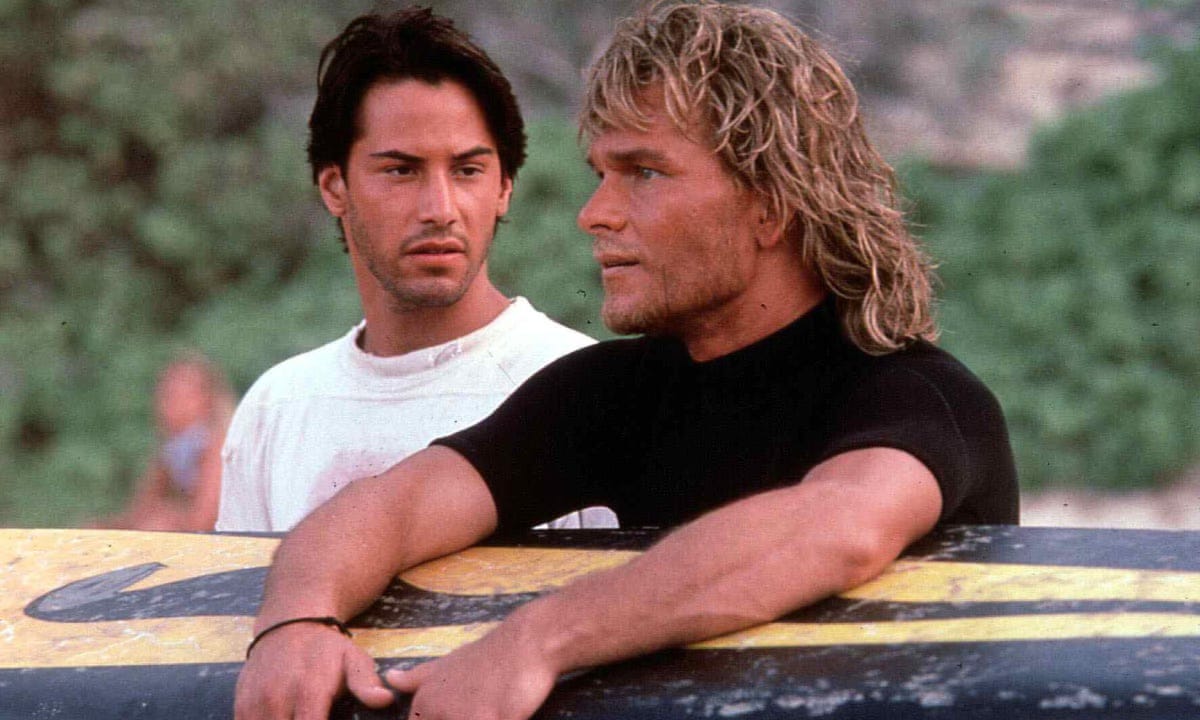
Next week’s movie is… Point Break
You can stream it on Peacock, as well as Tubi.
This essay was edited by Hannah Giorgis Yohannes. The FOOTNOTES video was produced by Richie Bozek.
1973’s Coffy.
1975’s Friday Foster.
1974’s Foxy Brown.
1975’s Sheba, Baby.
This is the kind of thing you can only say if you haven’t watched Pulp Fiction in a few months, because every time you watch Pulp Fiction you come out of it like, “Man… Sam Jackson… I think I just watched one of the 25 greatest individual performances ever.”
Possibly 1995. There’s some argument about it on the internet.
Who knew Shea was a romantic? That was very sweet what you said about the red light, and showing us Pam Grier being flooded in it. That to me was really powerful about this movie- she and Robert Forster are very good looking people but not the typical age or type for leading roles. Both having this opportunity to shine was amazing and they knocked it out the park. They had great chemistry.
This is the best, most important article I've ever read on a Friday; that could only drop on a Friday; that could only be seen on a Friday.
Thursday? Nay nay! Friday = Fri-yays at GOOD MOVIE.